This post may contain affiliate links. As an Amazon Associate, We earn from qualifying purchases if you buy through our links at no extra cost to you. Please read our full disclosure here.
Whether you’re walking into a paint-your-own pottery studio for the first time or you’ve been glazing bisqueware in your kitchen for years, the hardest part is always the same: staring at a blank piece and wondering what on earth to put on it.
This list is here to fix that. Below you’ll find 20 pottery painting ideas organized by style and skill level, from five-minute designs anyone can nail to layered techniques that’ll keep experienced painters happily busy for an afternoon.
What You Need Before You Start
Before the fun part, a quick note on supplies because the right materials make a huge difference as you know
- You’ll be working with bisqueware and underglazes.
- You’ll want a range of brush sizes: a wide flat brush for backgrounds, a medium round brush for shapes, and a fine liner brush for details.
- A few other handy items like painter’s tape for clean edges, a foam dauber for stippling, and a pencil for sketching designs
20 Pottery Painting Ideas
1. Botanical Leaf Prints
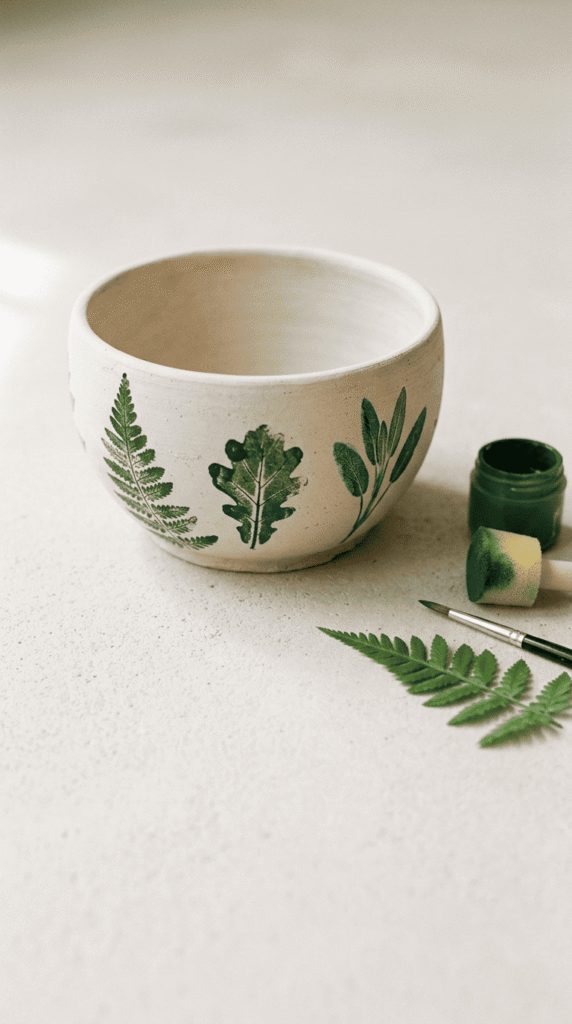
Collect a few leaves with interesting shapes, like ferns, monstera, and maple, and use them as stamps directly on your piece.
Brush underglaze onto the leaf, press it firmly onto the bisque, then peel it away slowly. The veining transfers beautifully.
2. Watercolor-Style Floral Blooms

This one looks impressive.
Use a round brush loaded with underglaze thinned slightly with water, and let petals bleed into each other while they’re still wet.
Think peonies, roses, or abstract blooms; nothing needs to be perfectly symmetrical.
3. Ocean Wave Patterns

Ohhh, this one is perfect for a summer DIY Project.
Use a medium brush to paint rolling wave shapes, curved, overlapping lines that stack from the base of the piece upward.
Add white foam details with a fine brush or the tip of a pencil eraser dipped in white underglaze.
Related Post: 20 Summer DIY Ideas That Are Actually So Good
4. Animal Portraits on Mugs
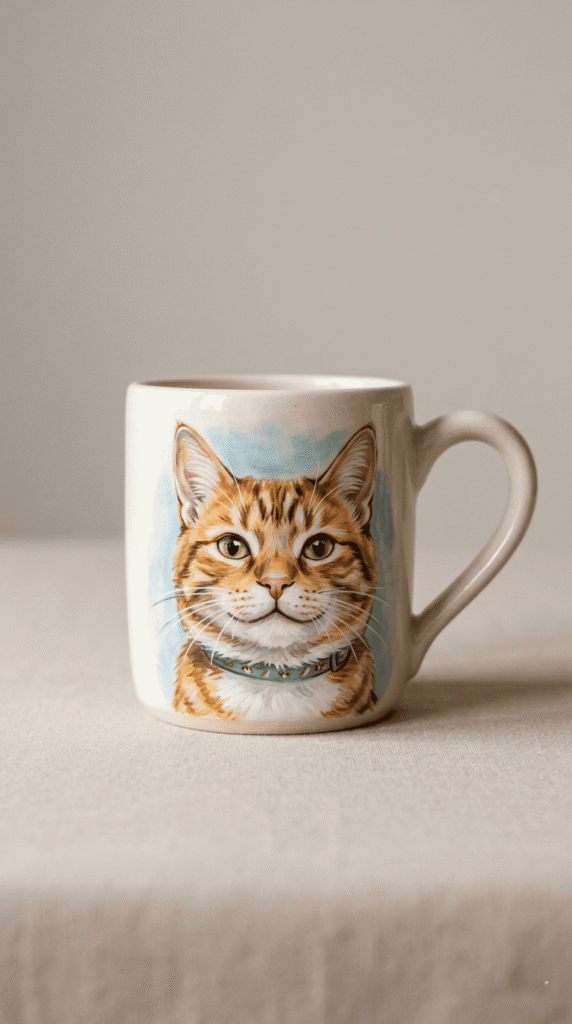
Your cute cat on your coffee mug is a good idea, lol. or a little bird on a bud vase.
You don’t need to be a skilled illustrator; a simplified, almost cartoonish style often looks better on ceramics than hyper-realistic attempts.
5. Mushroom and Forest Scenes
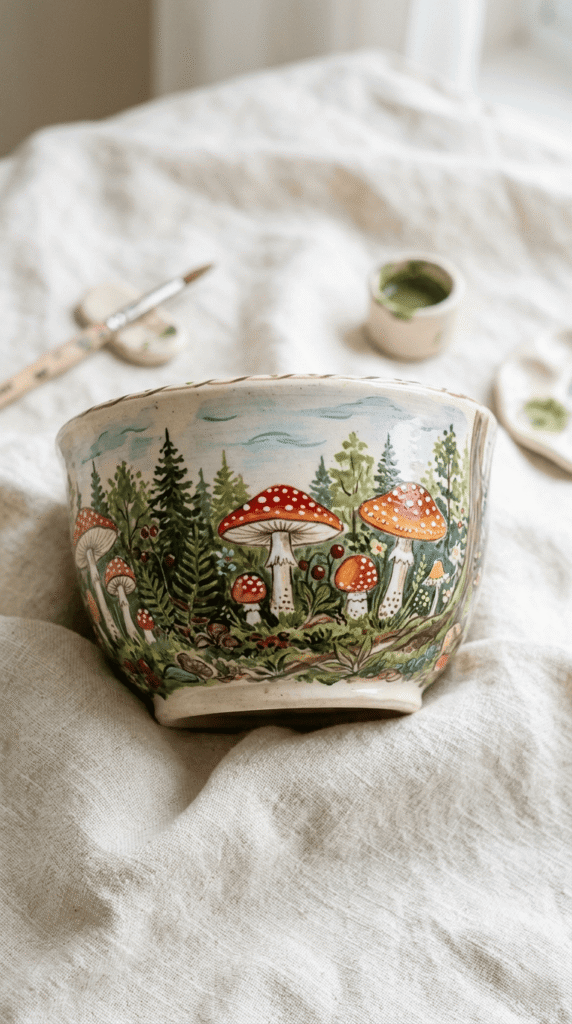
Paint a cluster of toadstools in earthy reds, creams, and browns.
Add tiny details: blades of grass, falling leaves, a crescent moon peeking through trees.
Even a simple single mushroom silhouette on a mug looks charming.
6. Minimalist Line Art
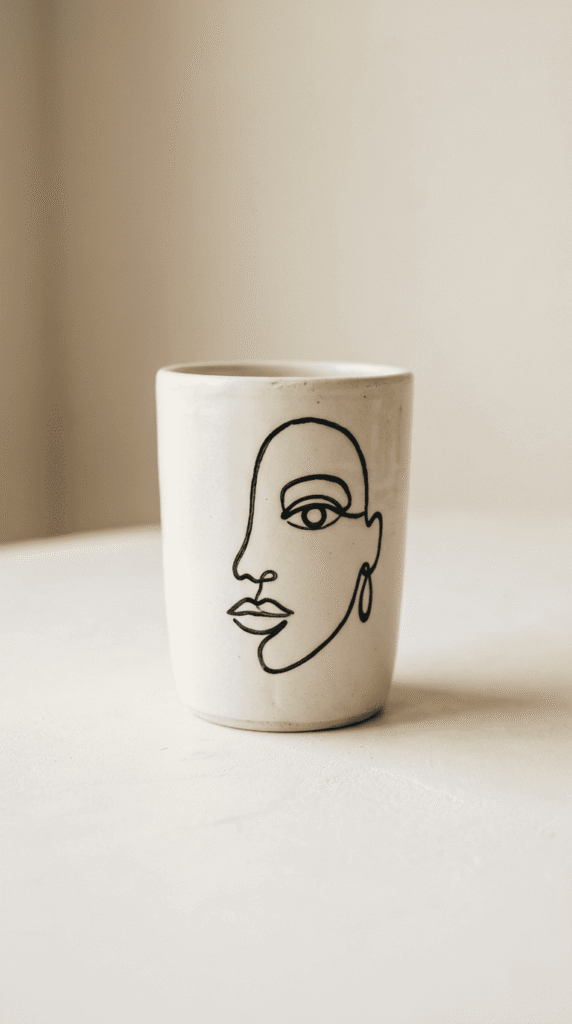
Pause for a moment; this design is absolutely stunning, featuring a single continuous line.
A face, a flower, and a mountain range drawn as a single unbroken stroke.
This style photographs beautifully and looks intentional and modern.
7. Mandala Patterns

Mandalas take patience but reward it.
Start from the center and work outward in rings of repeated shapes: dots, petals, triangles, and scallops.
A compass helps with circles, and a ruler is useful for dividing the space into equal sections before you start.
8. Color-Block Halves
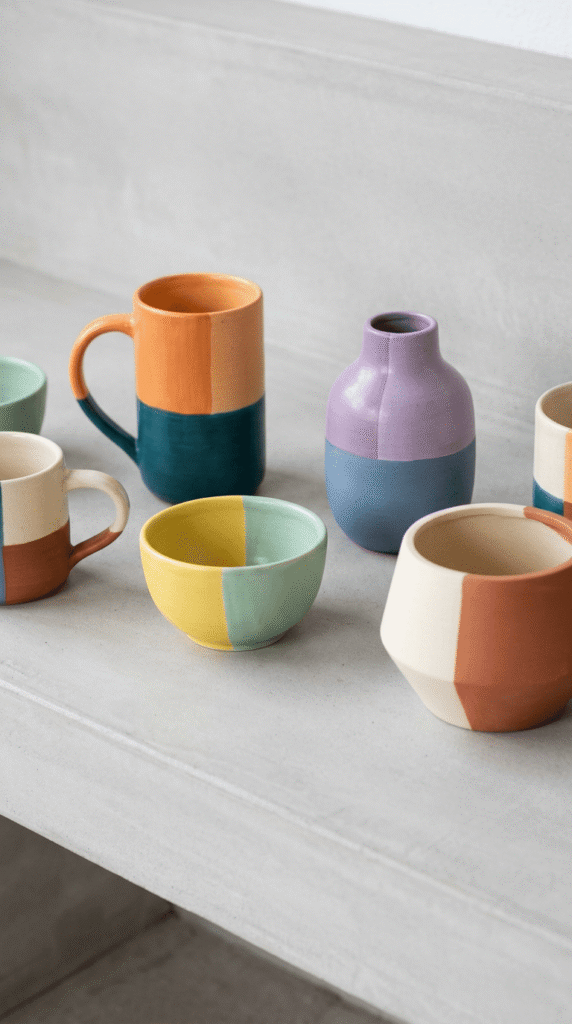
Tape off your piece exactly in half, diagonal, horizontal, or whatever feels interesting, and paint each half a completely different bold color.
Peel the tape while the underglaze is still slightly wet to avoid cracking. Simple, graphic, and very effective on mugs and plates.
9. Sgraffito-Carved Designs
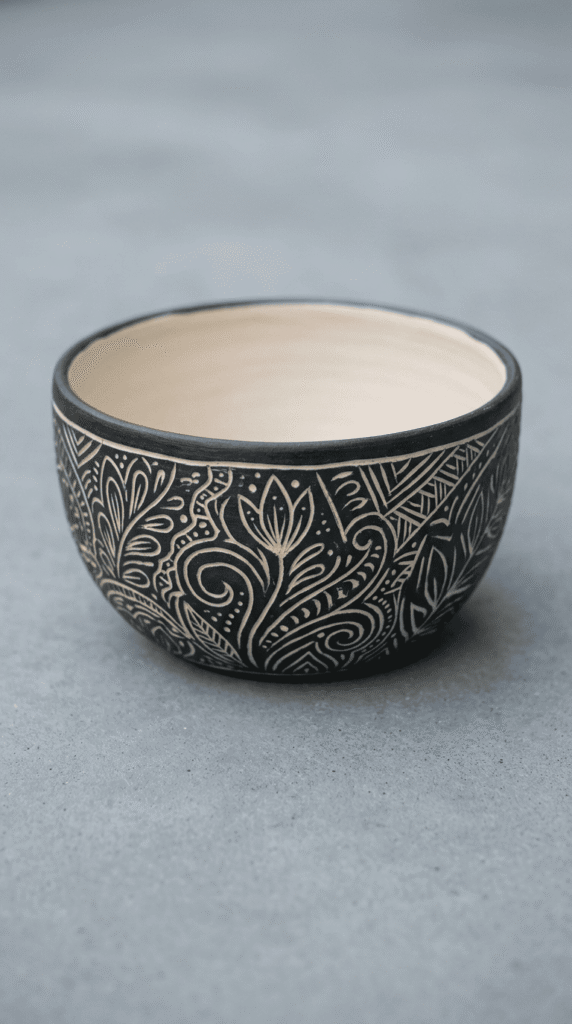
Sgraffito means “to scratch” in Italian, and it’s exactly that: you paint a layer of underglaze over the bisque, let it dry to leather-hard, then scratch a design through the top layer to reveal the white clay beneath.
The contrast is striking.
10. Polka Dots and Confetti Spots
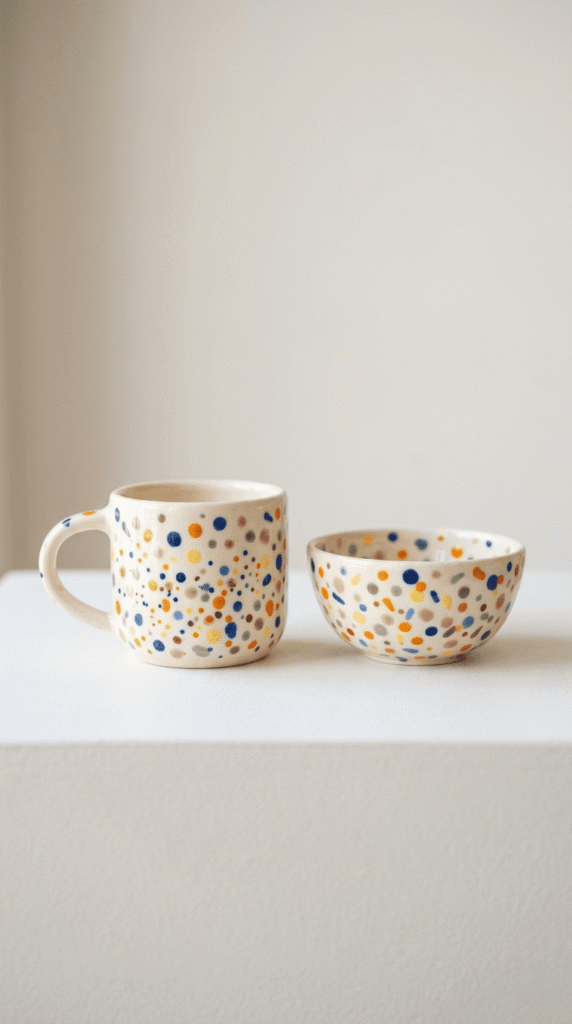
Underrated. A simple, joyful pattern that works on everything from kids’ bowls to elegant bud vases, depending on your color palette.
Use a pencil eraser dipped in underglaze for uniform small dots, or vary the sizes for a more playful scattered look.
Tip: Dots in complementary colors (blue + orange, pink + green) look lively and intentional rather than random.
11. Handprint Keepsake Plates
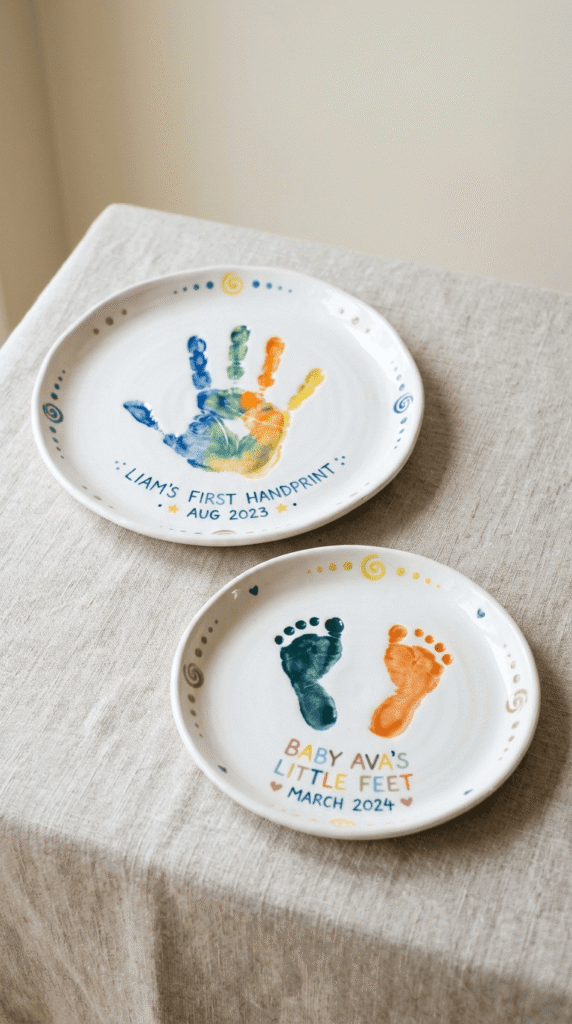
A genuine heirloom. Paint a child’s (or your own) hand with underglaze and press it firmly onto a flat plate.
Add a name, a year, and a little heart, and you’ve created something a family will keep for decades.
Works with footprints too, for babies.
12. Rainbow Drip Glaze Mugs
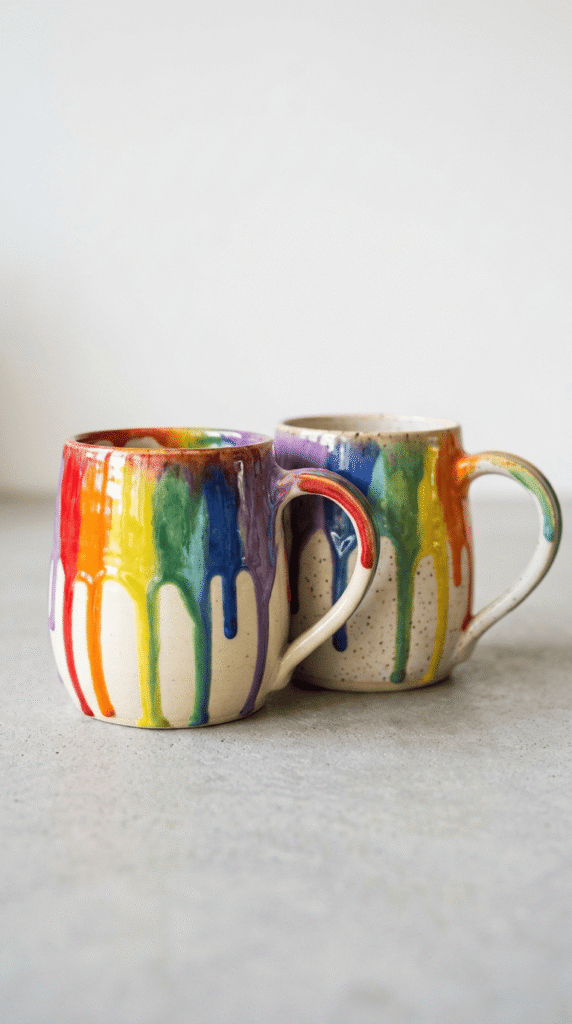
Paint horizontal stripes of different colors around the outside of a mug, blending them slightly where they meet.
During firing, the glaze naturally softens and runs just enough to create a gorgeous gradient drip effect.
Choose colors that blend well: red-orange-yellow or blue-purple-pink.
13. Name or Initial Lettering
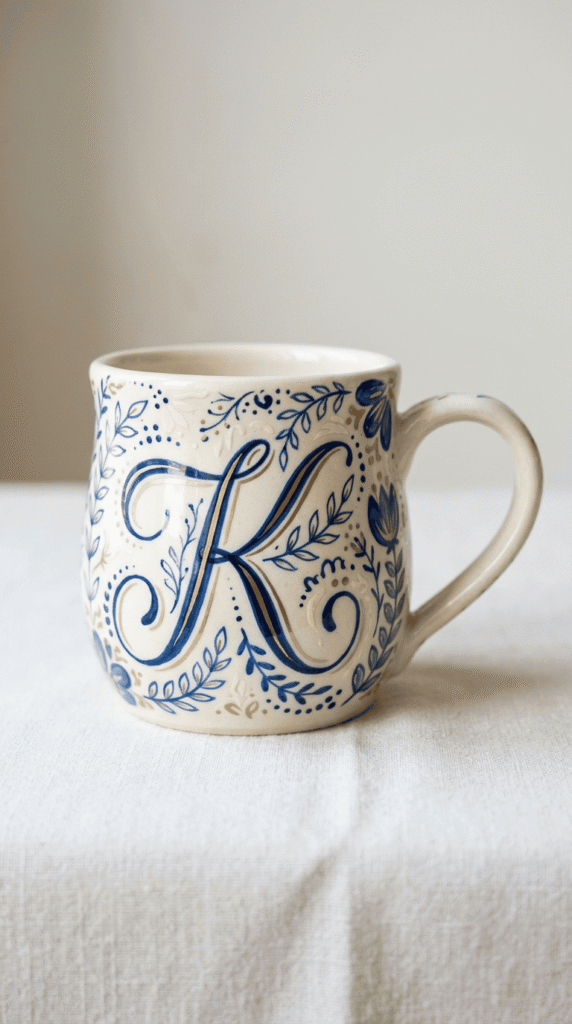
Personalization never goes out of style.
Paint a name in chunky block letters and fill each letter with a different color. Or go the other direction: a single elegant initial in a fine script surrounded by simple botanical details.
Either way, it makes a thoughtful, one-of-a-kind gift..
14. Smiley Faces and Emoji Bowls
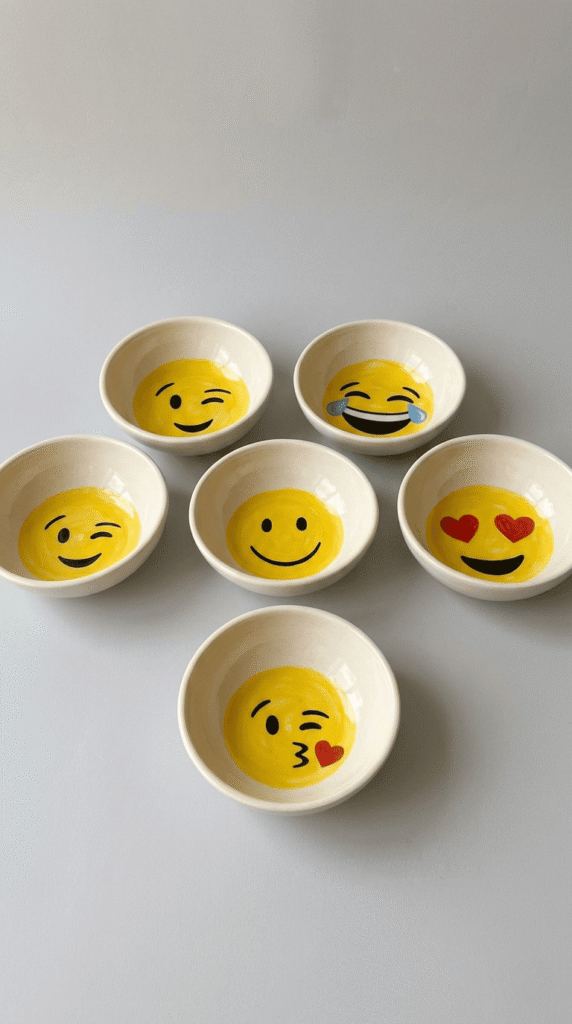
Yes, really.
A bowl with a big grinning face on the inside is genuinely delightful to eat cereal out of every morning.
Keep the lines bold and the colors bright this style relies on high contrast and simple shapes, which makes it very forgiving for beginners.
15. Majolica-Illustrated Scenes
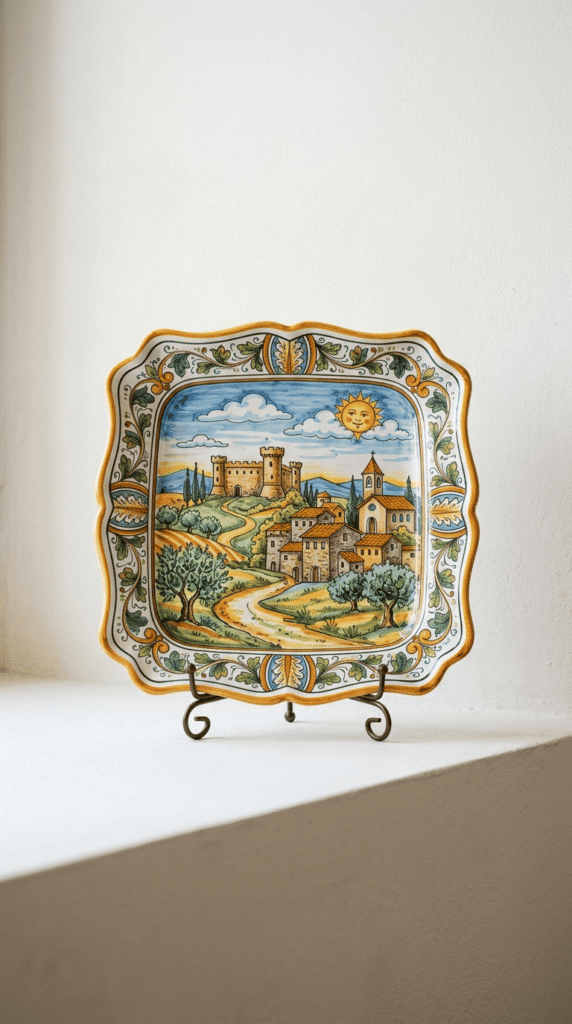
Majolica is a centuries-old tradition of painting detailed, colorful designs over a white tin glaze.
The effect is richly decorative think Italian countryside scenes, folk art florals, or intricate birds.
It’s slower and more demanding, but the results are extraordinary.
16. Layered Underglaze Landscapes
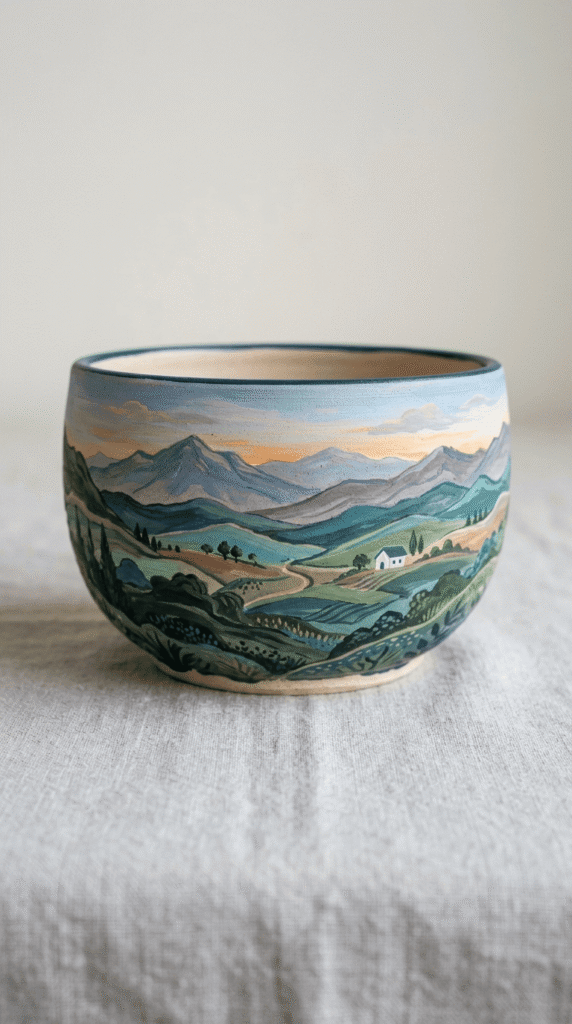
Landscape scenes work surprisingly well on cylinder-shaped pieces like vases and mugs, where you can paint a wraparound panorama.
Start with the sky at the top, then layer in distant mountains, mid-ground trees, and foreground details.
Each layer overlaps the one behind it slightly to create depth.
17. Raku-Inspired Surface Patterns
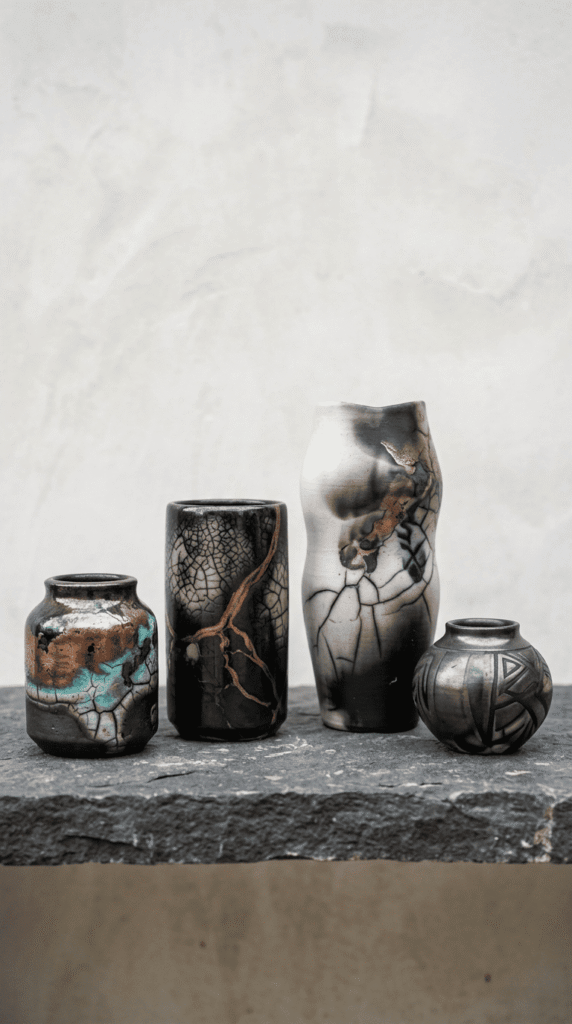
Even if you’re not doing actual raku firing (which involves removing hot pottery from the kiln and exposing it to combustibles a whole other adventure).
You can paint the aesthetic: crackled patterns, metallic copper and bronze tones, and dramatic black-and-silver designs that mimic the raku look.
18. Holiday-Themed Mugs and Ornaments
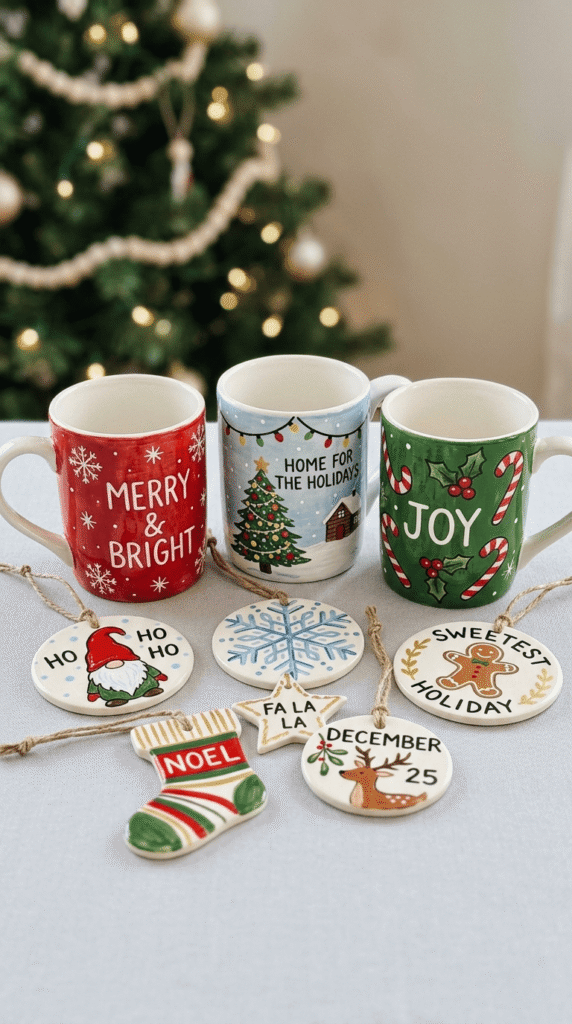
Paint-your-own pottery studios fill up in November and December for good reason a hand-painted mug is a genuinely meaningful gift.
Classic Christmas motifs (plaid, reindeer, snowflakes, Nordic stars) work well, but so do quirky Halloween pumpkins or Easter egg-shaped dishes.
These also make great family activity outings.
19. Personalized Wedding or Anniversary Gifts
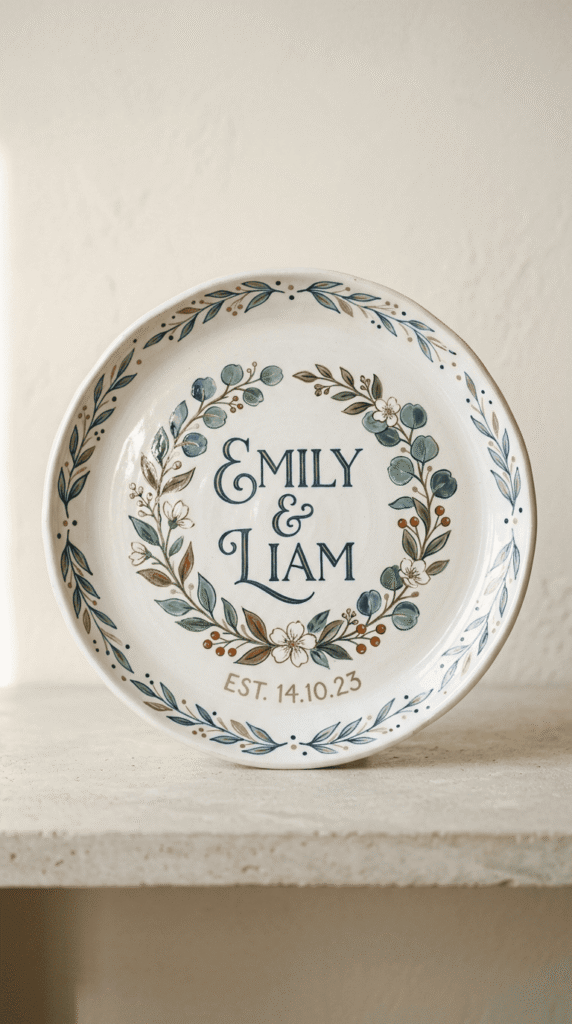
A plate commemorating a wedding date, initials intertwined, painted in the couple’s wedding colors.
Or a set of mugs, one labeled “Better” and one labeled “Half.” Hand-painted ceramics hit differently as gifts precisely because of the time and thought that went into them.
20.Zodiac and Constellation Bowls
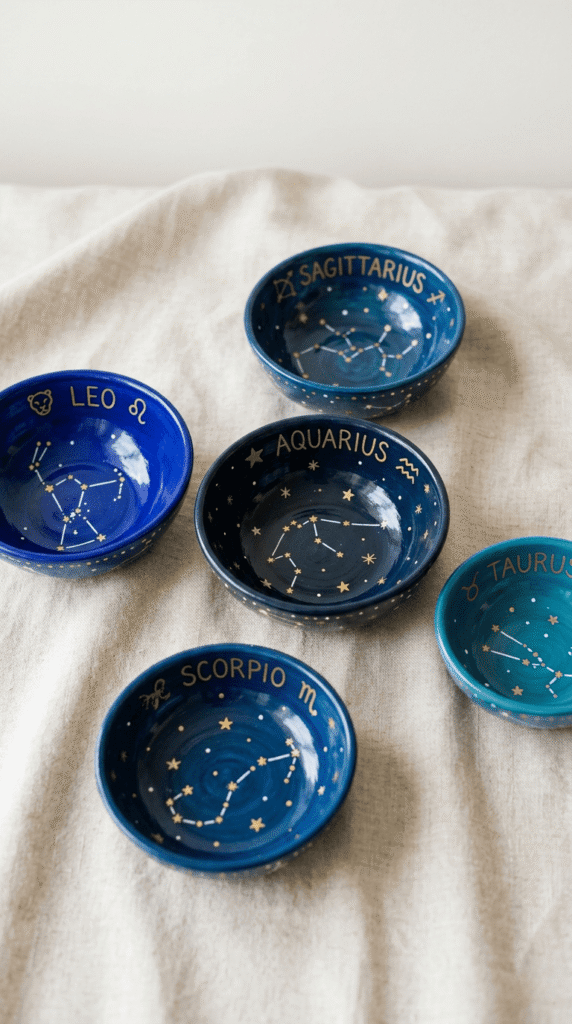
If you’re passionate about Astrology like I am, this design is sure to bring you joy.
Use a fine liner to paint the constellation’s star pattern, then fill in the surrounding space with a deep navy or midnight black.
Add gold dots for the stars themselves.
Frequently Asked Questions
What paint do you use on pottery?
It depends on your setup. At most paint-your-own studios, you’ll use underglazes, thick, kiln-fired paints that become permanent after firing. At home with air-dry clay, acrylic craft paint sealed with a waterproof varnish is a more accessible option, though pieces painted this way aren’t food-safe.
Can you paint pottery without a kiln?
Yes. Air-dry clay pieces can be painted with acrylics and sealed without any firing. Oven-bake clays like Sculpey can also be cured in a regular home oven. The trade-off is durability and food safety. Kiln-fired pottery is significantly stronger and dishwasher-safe.
How do you seal painted pottery at home?
For pieces that won’t hold food or liquid, Mod Podge (the outdoor or dishwasher-safe formula) works well. For food-contact surfaces, a food-safe epoxy resin or a clear ceramic glaze fired in a kiln is the only reliable option.
Is pottery painting hard for beginners?
Genuinely, no. The forgiving nature of bisqueware, smooth, matte, and easy to paint on, makes it one of the most beginner-friendly craft surfaces there is. Mistakes are easy to fix before firing, designs don’t have to be perfect to look beautiful, and simple ideas often produce the most satisfying results.
Where can I paint pottery near me?
Search “paint your own pottery” or “PYOP studio” plus your city. Most studios provide everything: bisqueware, paints, brushes, and kiln firing for a per-piece price. It’s a great activity for families, date nights, birthday parties, or just a solo creative afternoon.