This post may contain affiliate links. As an Amazon Associate, We earn from qualifying purchases if you buy through our links at no extra cost to you. Please read our full disclosure here.
Your entryway is the first thing people see. It’s also where the shoes, bags, keys, and wet umbrellas pile up. So the furniture there has to look good and work hard.
That’s why I love vintage entryway furniture. Old pieces are usually solid wood, they’ve got real character, and they handle daily mess way better than a flat-pack cabinet. Plus, nobody else on your street has the same bench.
One more thing. You don’t need an antique store budget for any of this. Thrift shops, estate sales, and online marketplaces are full of solid old pieces, and plenty of new furniture is made in a vintage style if you’d rather buy fresh. I mixed both kinds into this list so you can choose what fits your space, your wallet, and your patience.
Buying Vintage Entryway Furniture
A few quick checks will save you from a piece that looks perfect online and won’t fit your door. Most of these are the kind of thing you only learn by getting it wrong once. (Ask me about the bench that blocked a door. Actually, don’t.)
- Measure first. Write down your entry width, your wall space, and how far the door swings open. Most mistakes come down to a piece being two or three inches too deep, and a strip of painter’s tape on the floor shows you the footprint before you spend anything.
- Pick one anchor piece. A table, a bench, or a hall tree, then build around it. Three big pieces in a small entry feels crowded fast, while one strong piece with a couple of small extras always looks calmer.
- Check the wood. Press on the corners, look for wobble, open every drawer. Scratches and faded spots are fine (that’s the whole point of vintage), but loose joints are a headache.
- Plan for wet shoes. Your entry works harder than any other room. If a piece is too delicate for rain, mud, and bags, keep it on the dry side of the room or add a tray.
Vintage Entryway Tables And Consoles
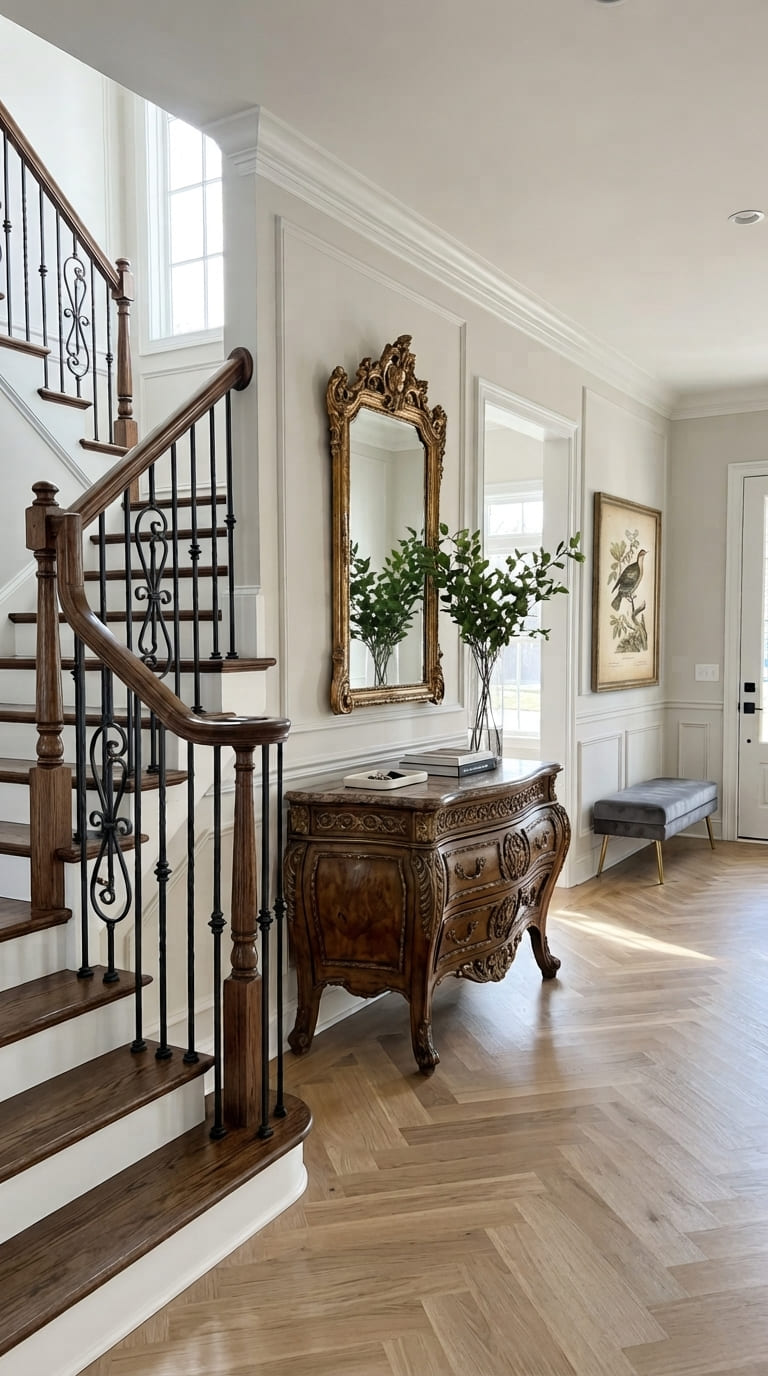
A table is the easiest place to start, since it gives you a spot for keys, mail, and a lamp. It’s also the piece guests notice first, so it sets the mood for everything else.
1. Turned-Leg Console Table
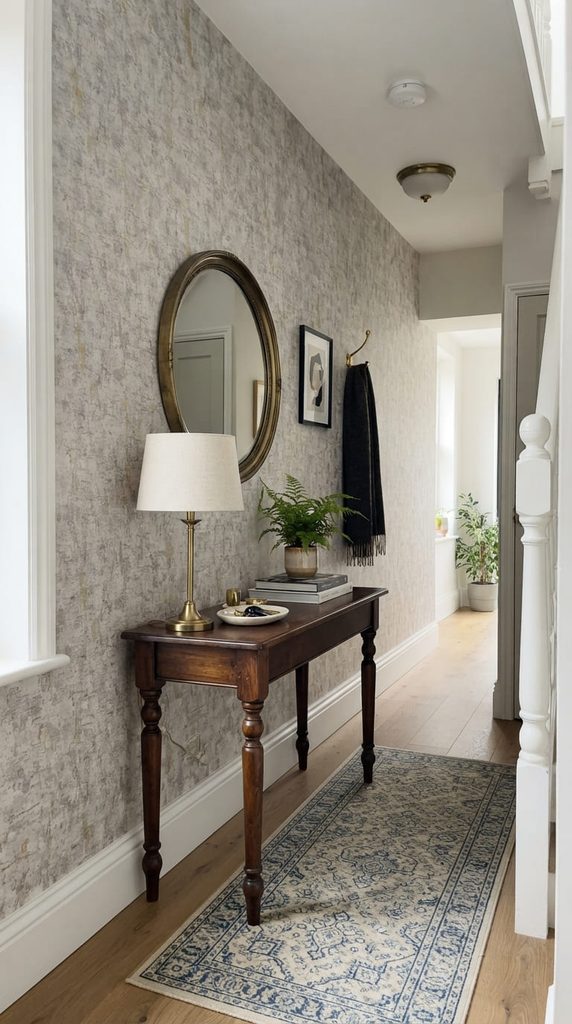
If you only buy one piece from this list, I’d make it this one. Turned legs, a little wear on the wood, and suddenly a boring hallway has a point of view. I like a small tray for keys and one lamp, nothing else (clutter on a console gets old fast). Watch the depth, though. A narrow console table at 10 to 12 inches keeps the walkway open, and anything deeper starts to feel like an obstacle course.
2. Demilune Entry Table
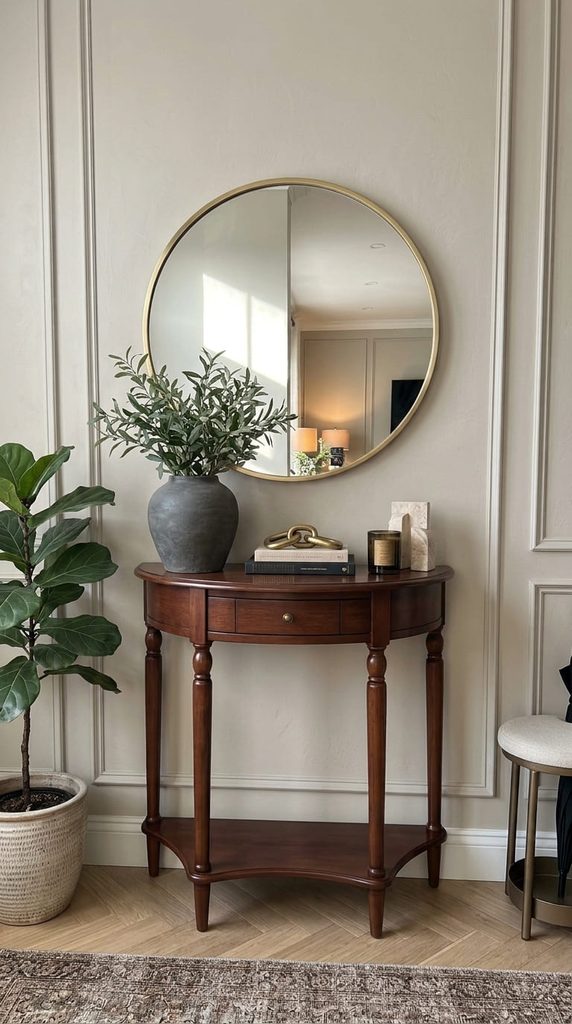
Corners hurt. Anyone who’s walked into a table edge with an armful of grocery bags knows it. That’s the case for a demilune, a half-moon table whose curved front just lets you pass. Hang a round mirror above it and you’re basically done. The back is straight, so it needs a flat wall behind it, and a demilune table with a drawer hides the mail pile nicely.
RELATED: Entry Table Decor Ideas That Elevate Your Home
3. Marble-Top Pedestal Table
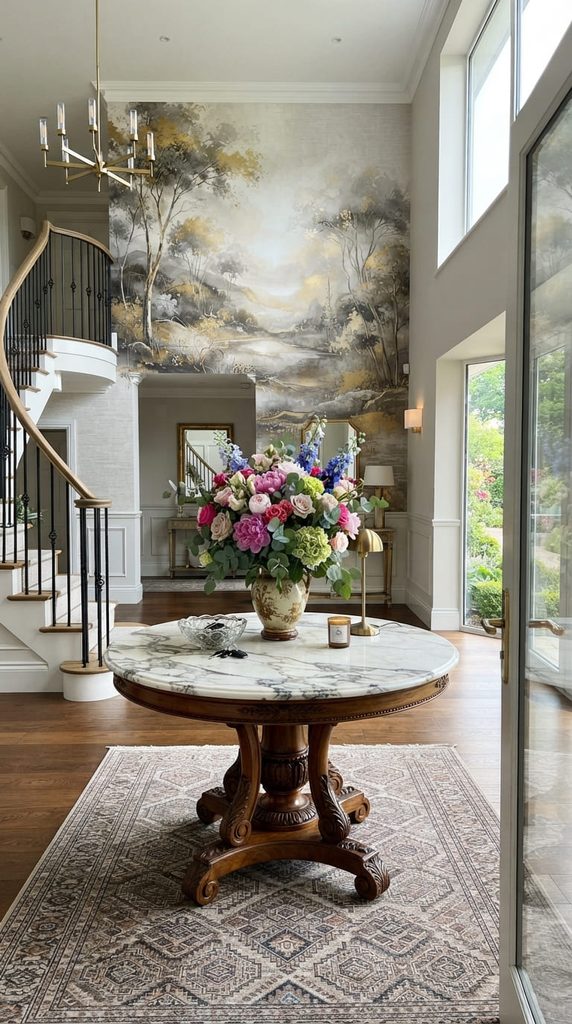
Okay, this is the glamorous one. A round marble-top pedestal table in the middle of a big foyer? It looks like the house has a name. Picture a giant vase of fresh flowers on top while guests walk in the door, and a pair of candlesticks if you’re feeling fancy. It needs room, since that round base wants space on every side, and marble stains. A small tray for keys and anything damp keeps it looking good.
Vintage Entryway Benches, Hall Trees, And Seating
If your entry is where everyone sits down to pull off their shoes, start here. Seating makes a small space feel useful right away, and it gives guests a spot to land, which makes the whole entry feel more welcoming.
4. Vintage Hall Tree With Mirror And Hooks
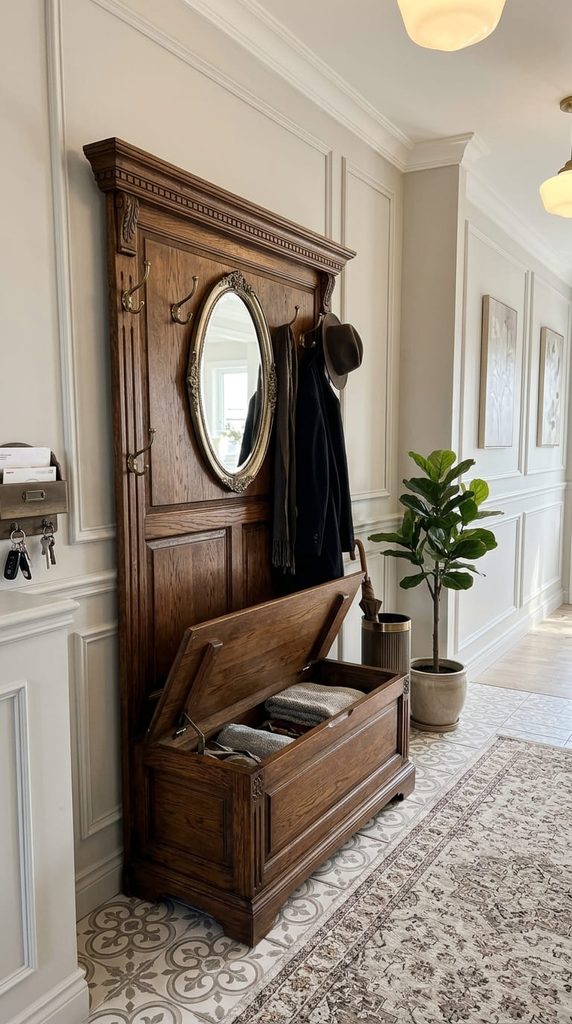
A hall tree does the work of three pieces. Bench, mirror, hooks, all in one spot on the wall. That’s why it’s the go-to for small entries. Brass or iron hooks look best, and a lift-up seat is great for hiding shoes. Tug on every hook before you load it with coats (old ones can be wobbly), and a vintage style hall tree with solid hardware saves you the hassle.
5. Upholstered Vintage Bench
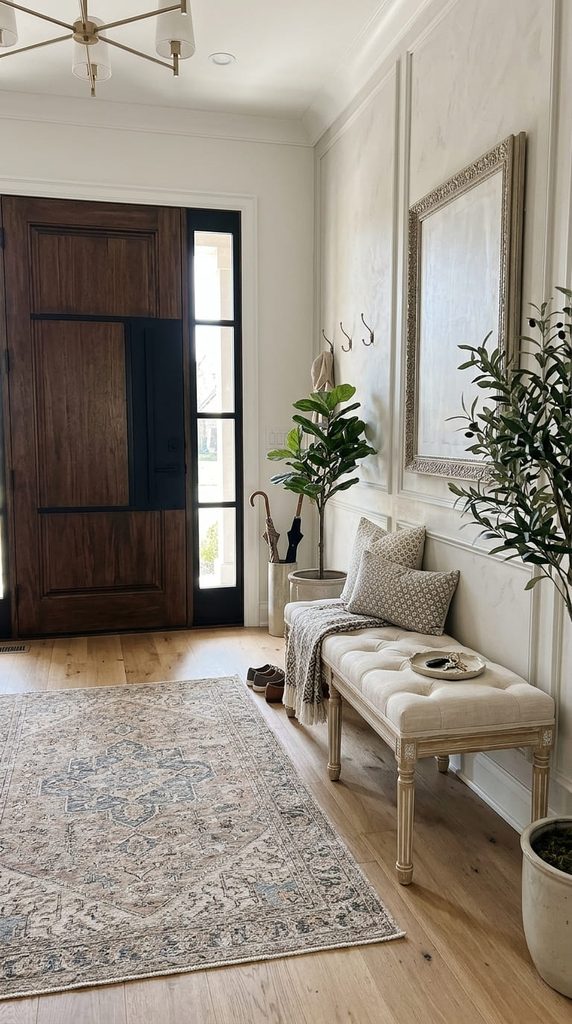
Sitting down to take off your boots is a small joy, and a cushioned bench makes it better. A velvet or patterned seat adds color without painting a single wall. Pick a wipeable fabric or a cushion with a removable cover, because rain and shoes will find it, I promise. For most entries, a bench around 36 to 48 inches wide is the right size.
6. Rustic Wood Storage Bench
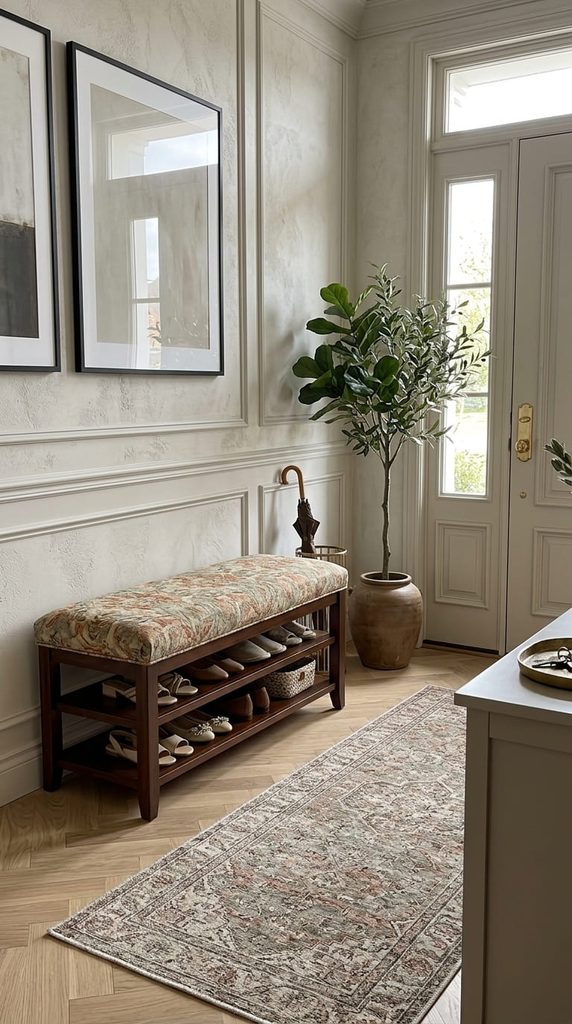
This one’s for the shoe-pile people. A wooden bench with a lift lid swallows shoes, scarves, and dog leashes, and the top stays clear. The farmhouse look works with white walls and dark ones. One warning: old lids can slam shut. Look for a lid stay or a soft-close hinge, like on this kind of storage bench, so nobody loses a finger.
RELATED: Entryway Mudroom Ideas
7. Vintage Storage Trunk
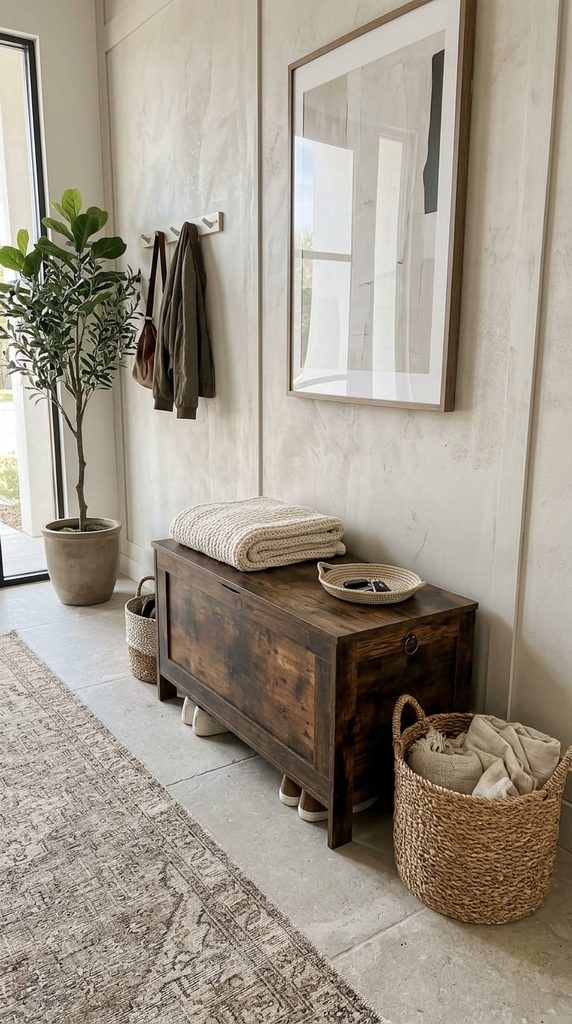
An old trunk is a seat, a side table, and a hiding spot all at once. Fold a blanket on top, park a basket beside it, done. The catch is that anything heavy on the lid has to move every time you need something inside. So use it for stuff you don’t grab daily, like extra blankets and seasonal bags, and give a vintage style storage trunk a quick latch test before you commit.
8. Bentwood Or Windsor Accent Chair
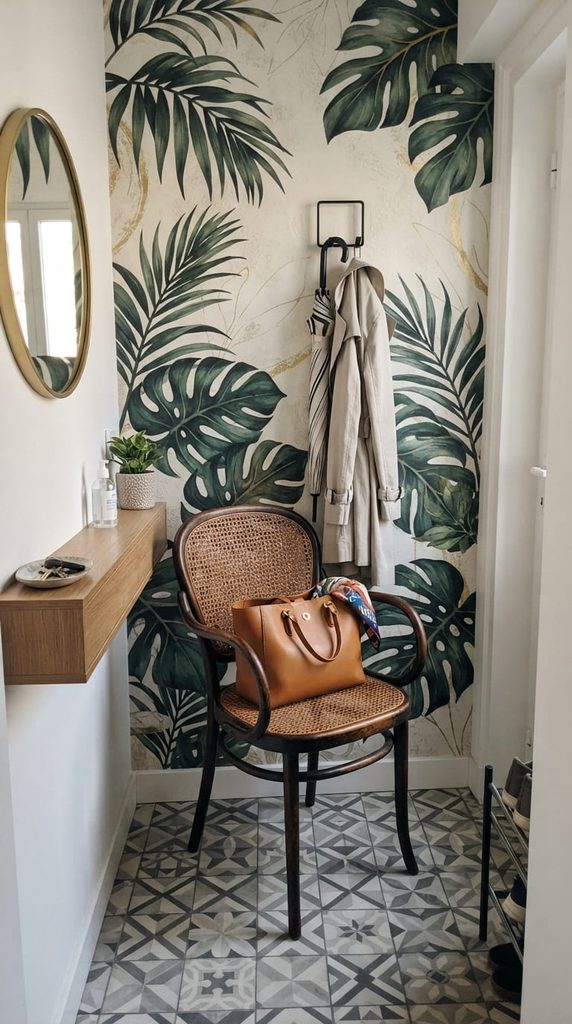
Not every entry has room for a bench. That’s where a skinny chair earns its spot. Bentwood and Windsor chairs have thin legs and open backs, so they barely register in the space. Drop a bag on the seat and go. Pick a light frame you can slide aside when the door swings, something like a bentwood accent chair.
9. Vintage Settee For Large Foyer
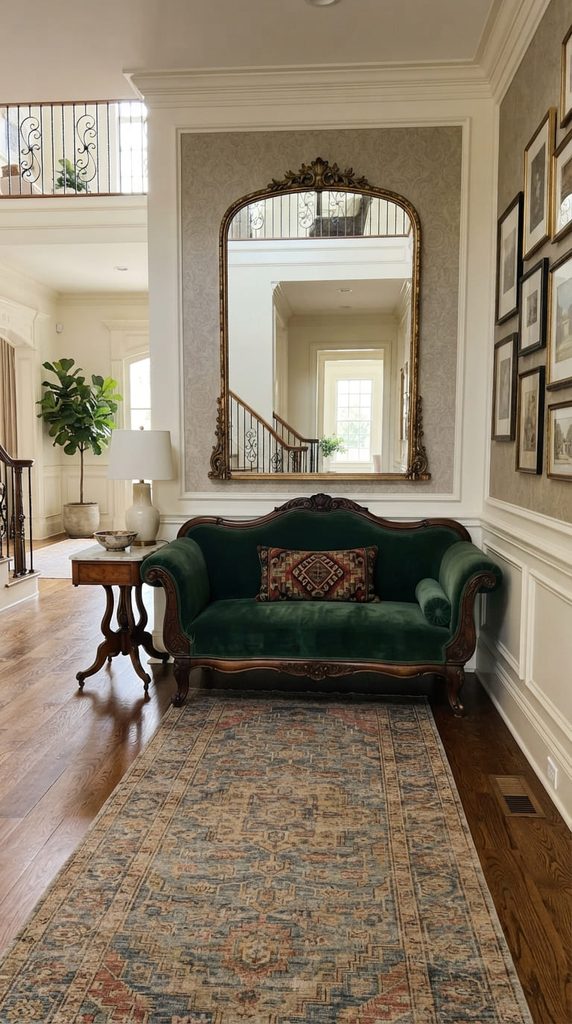
Big foyer? Then go dramatic. A vintage settee under a giant mirror, with a long runner underneath, feels like a hotel lobby (but at home, and with your own coffee). You need about 3 feet of clear floor in front so people can walk by without squeezing. Estate sales are the place to hunt. Tired fabric can be redone, so a good frame matters more than the cushion.
Vintage Entryway Storage Furniture
Entries collect stuff. These pieces give all of it a place to go while still looking like part of the room. The trick is choosing storage that’s shallow enough for your space and pretty enough to leave out in the open.
10. Antique Dresser As Entry Storage
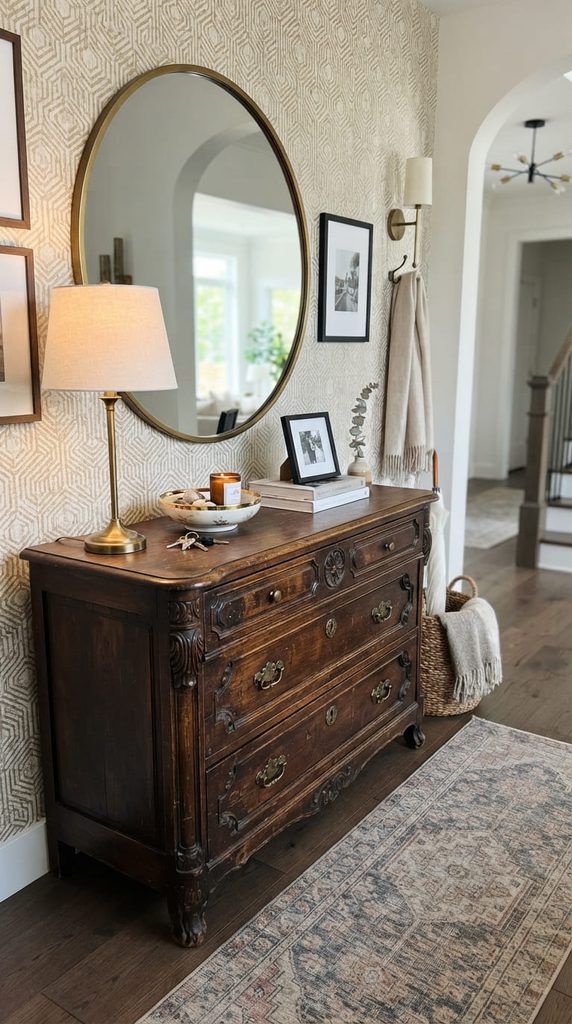
A dresser in the entry sounds odd until you try it. The top holds a lamp and a key bowl, and the drawers swallow gloves, hats, chargers, even dog gear. Line the drawers with fabric or shelf liner (rough old wood snags everything). The only real problem is depth. Many dressers run 16 to 20 inches, which is a lot for a hallway, so grab a tape measure first.
11. Rattan Or Cane Cabinet
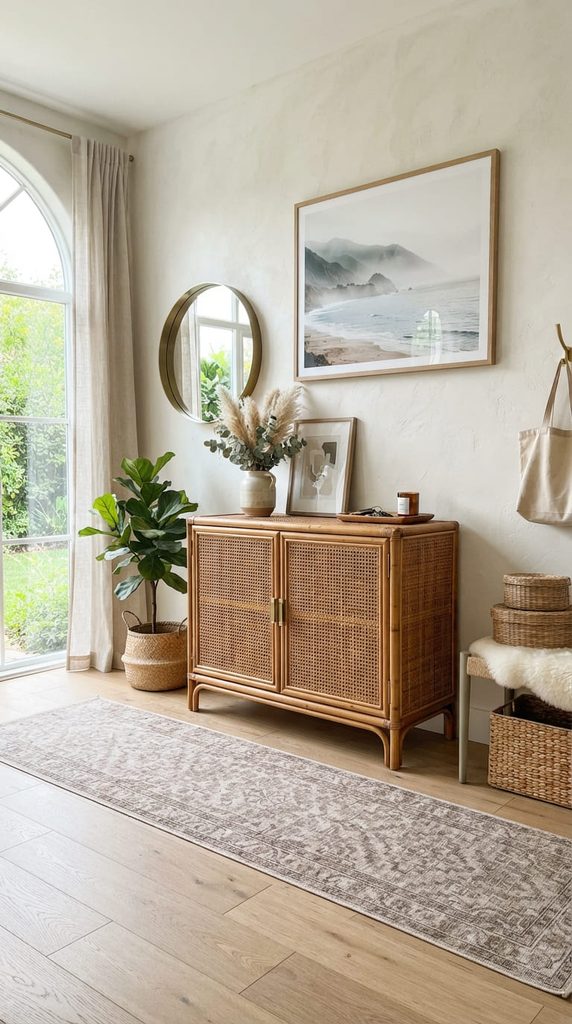
Rattan and cane feel old and airy at the same time. A cabinet with woven doors hides clutter while letting air move through, which helps if shoes live inside. Pair it with a plant and a basket and you’re set. Even a plain white wall looks styled next to it. Keep it away from damp corners, because cane can sag in wet air. A rattan cabinet in a dry spot can last for years.
12. Slim Vintage Shoe Cabinet
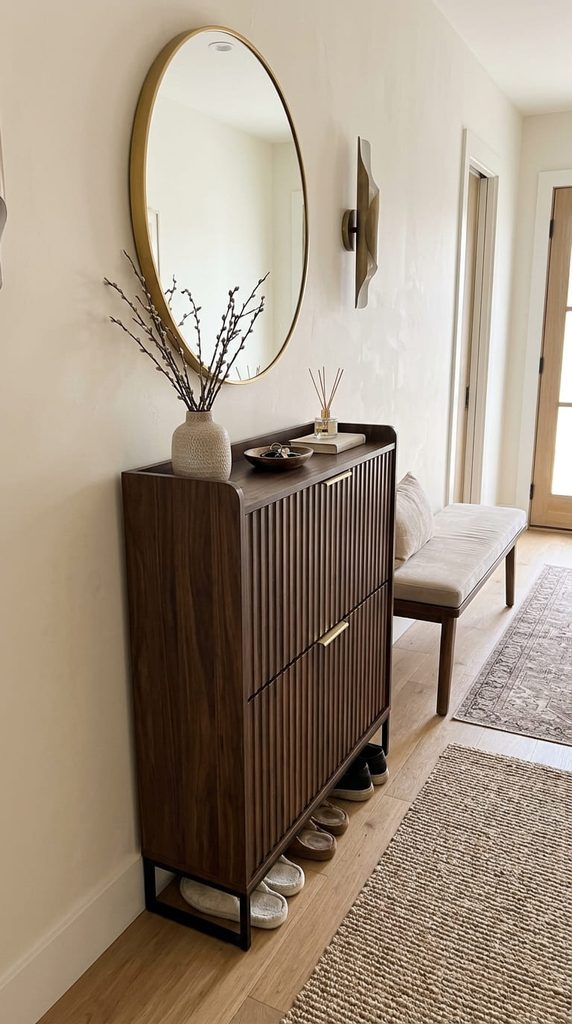
Shoes are the main reason entries look messy. A slim cabinet with flip-down doors puts them all behind a clean wood front. Many are only 9 to 12 inches deep, so they squeeze into hallways where nothing else fits. Crack the doors open now and then to air things out. A slim shoe cabinet with a little ventilation works best.
RELATED: 16 Shoe Organization Ideas For Girls
13. Narrow Wooden Bookshelf
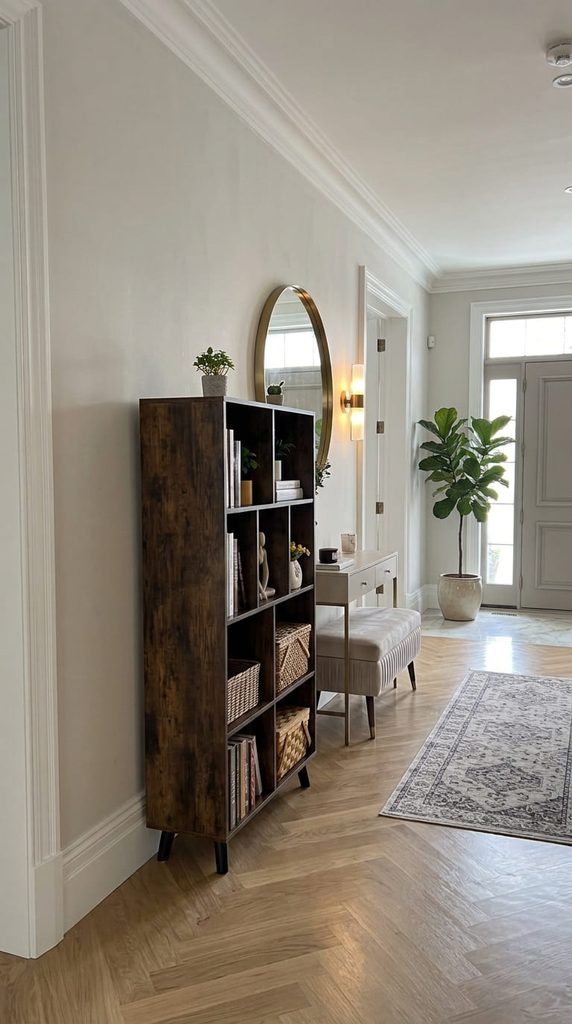
Go tall instead of wide. A narrow bookshelf gives you storage without eating the floor. Baskets on the bottom shelves hold shoes and bags, and the top shelves are for the pretty stuff, like a few books and a small lamp. It adds height to a flat wall too. Tall furniture can tip, so strap it to the wall, and check that a narrow wooden bookshelf comes with a wall strap.
Small Vintage Entryway Furniture Extras
You don’t always need a big piece. Sometimes the small ones are what make the entry feel finished, and they’re usually the cheapest and easiest to swap out when your taste changes.
14. Wall-Mounted Peg Rail
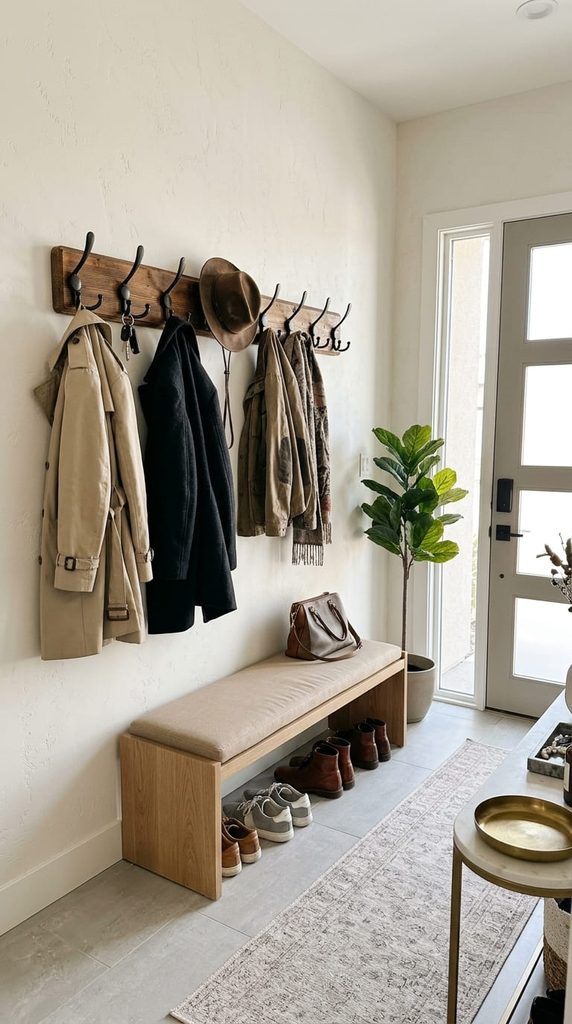
Zero floor space. That’s the whole sell. A wooden peg rail holds coats, hats, and bags in a tidy row, and the old Shaker look goes with nearly everything. Screw it into wall studs, not just drywall, because a full set of winter coats weighs more than you’d guess. A wooden peg rail is also one of the cheapest ways to get a vintage look.
15. Brass Umbrella Stand
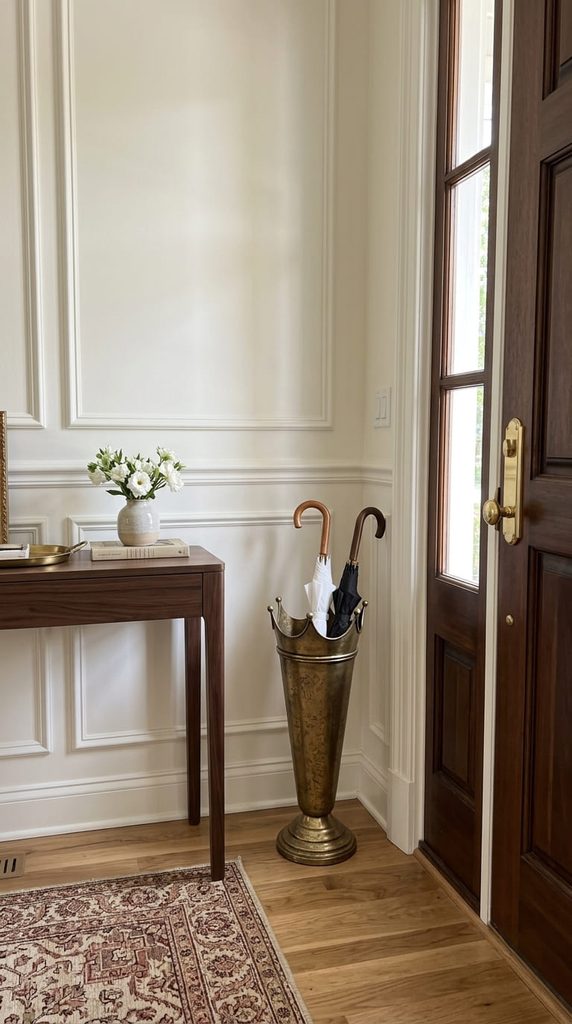
Small, cheap, and weirdly satisfying. A brass umbrella stand by the door makes the whole corner look finished. An old milk can or metal bucket works too if you spot one while thrifting. Drop a plastic liner inside to catch drips, since water marks wood floors. A brass umbrella stand is a fun first piece if you’re starting small.
Frequently Asked Questions
What Counts As Vintage Entryway Furniture?
Vintage entryway furniture is any older piece you use near your front door, like a console table, bench, hall tree, or cabinet. Most people call something vintage when it’s at least 20 years old, and antique when it’s 100 or more. You can buy real secondhand pieces or choose new ones made in a vintage style. The label matters less than how the piece looks and works in your space.
What Vintage Furniture Works Best In A Small Entryway?
Slim pieces win, like a narrow console table, a peg rail, a small chair, or a shallow shoe cabinet. A hall tree is also great, because it gives you a seat, a mirror, and hooks in one spot. Skip the big stuff like a settee or a wide dresser, even if you fall in love with one at a flea market. Aim for furniture that’s 12 inches deep or less so you can still walk through easily.
How Deep Should An Entryway Table Be?
For most entries, a table between 10 and 14 inches deep is the sweet spot. That’s deep enough for a lamp and a small tray, but not so deep that you bump into it with bags. If your hallway is very narrow, stay closer to 10 inches. In a large foyer, you can go deeper or even choose a round pedestal table.
Where Can You Buy Vintage Entryway Furniture?
Thrift stores, estate sales, flea markets, and online marketplaces are the best places for true vintage. You’ll often find solid wood pieces at good prices if you’re patient, and early mornings at estate sales usually have the best selection. If you want something new that looks old, many furniture stores and online shops sell vintage-style benches, hall trees, and consoles.
How Do You Protect Vintage Wood Furniture In An Entryway?
Use trays, coasters, and mats to keep wet items off the wood. Put a rug or boot tray under the shoes so water doesn’t sit near the legs. Wipe up spills right away, and dust with a soft, dry cloth. Keep the piece out of direct afternoon sun too, since it can fade the finish over time.
You don’t need to buy all 15 of these. Pick one piece you love, maybe a bench or a little console, and let that be your starting point. Once it’s in, you’ll see what the space still needs, and that’s usually when the next piece becomes obvious.