This post may contain affiliate links. As an Amazon Associate, We earn from qualifying purchases if you buy through our links at no extra cost to you. Please read our full disclosure here.
These Japandi bedroom ideas are proof that a room can feel calm, expensive, and lived in all at the same time.
Okay, can we talk about how good a truly calm bedroom feels? Not the Pinterest kind of calm where everything is white and a little cold and you’re scared to actually sit on the bed. I mean the kind of calm that comes from a room that just feels right the second you walk in.
That’s basically the whole point of Japandi. It’s this beautiful mashup of Japanese minimalism and Scandinavian coziness, and honestly, it might be the easiest way to make a bedroom feel like an actual retreat instead of just a place you sleep. Think warm wood, soft textures, a color palette that never yells at you, and just enough negative space to let the room breathe.
So if your bedroom currently feels cluttered, cold, or like it’s stuck between five different styles that don’t agree with each other, you are exactly who this list is for.
20 JAPANDI BEDROOM IDEAS
Here are 20 Japandi bedroom ideas that’ll help you build a space that feels quiet, warm, and completely put together.
1. Start With a Low Profile Platform Bed
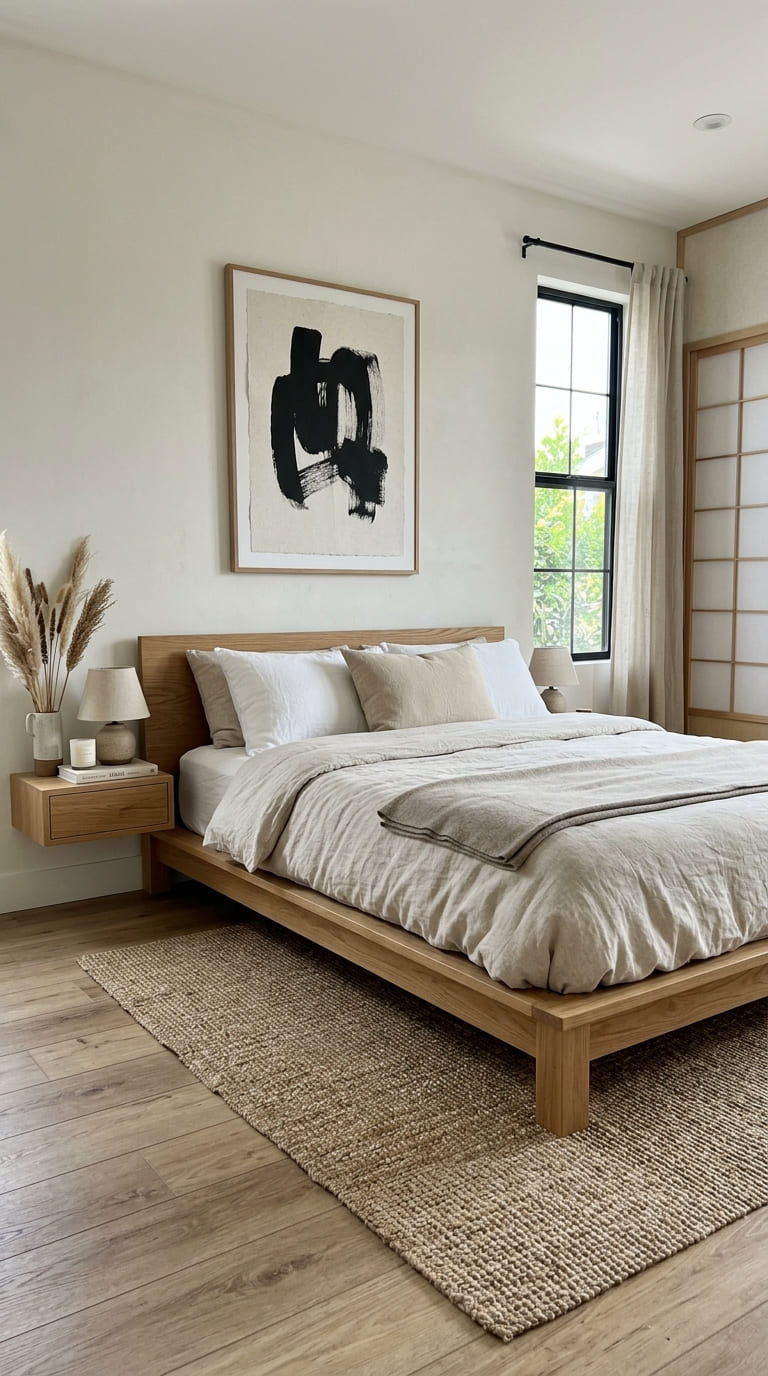
Honestly, the bed is where Japandi starts. A low platform frame in a natural wood tone is basically the backbone of this whole aesthetic, and it does more work than any other single piece in the room.
I love how a lower bed automatically makes the ceiling feel higher and the whole space feel more open. It also just looks intentional in a way that a tall upholstered frame usually doesn’t.
If your current frame is bulky or heavily tufted, swapping it out is honestly the single fastest way to shift your whole room toward Japandi. Everything else on this list gets easier once that foundation is right.
2. Choose Warm Wood Tones Over Cool Neutrals
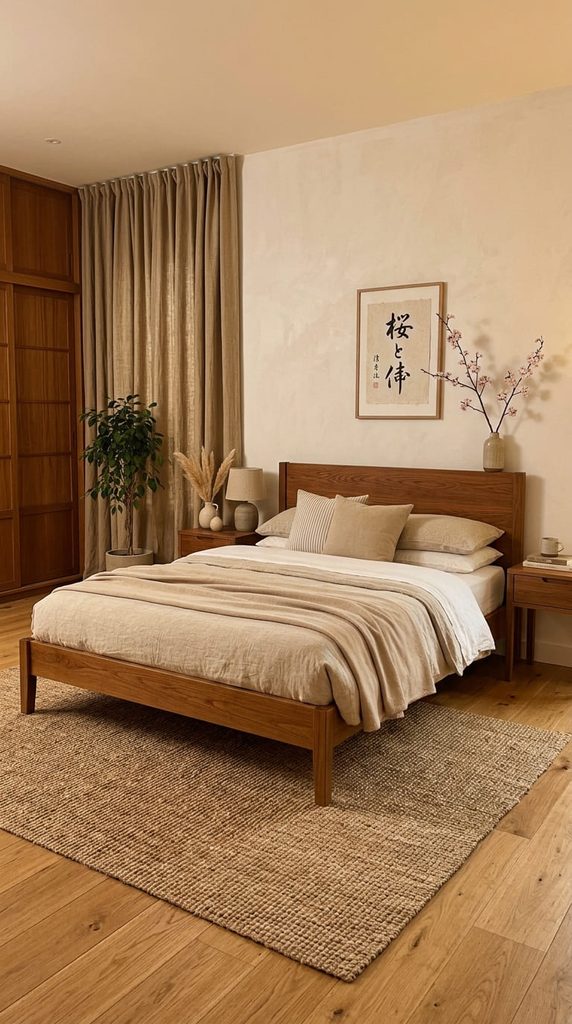
This is the detail that separates Japandi from plain minimalism, and it’s the one people skip the most. Cool grays and stark whites read as sterile fast. Warm wood is what makes the whole room feel inviting instead.
I’d steer toward oak, walnut, or a warm honey toned wood for your nightstands, dresser, and bed frame. Even if you only swap one piece, the warmth changes the whole vibe of the room.
Mixing metals in here works too, but keep them soft. Brushed brass or matte black plays nicer with warm wood than anything shiny or chrome.
3. Layer In Linen Bedding With Muted Earth Tones
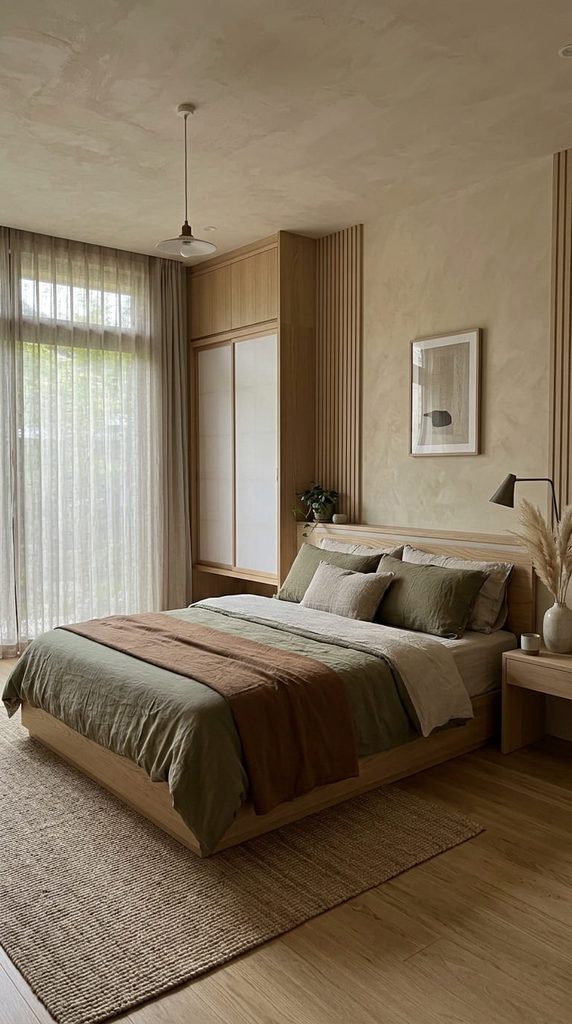
Bedding does a lot of heavy lifting in a Japandi room, so this is not the place to cheap out. Linen has this slightly rumpled, lived in texture that reads as effortless instead of stiff, which is exactly the mood you want.
Stick to a palette of clay, sage, oatmeal, or soft charcoal. These colors feel grounded without being boring, and they photograph beautifully if you’re the type who takes a picture of a freshly made bed (no judgment, I do it too).
4. Bring In Paper or Rice Paper Lantern Lighting
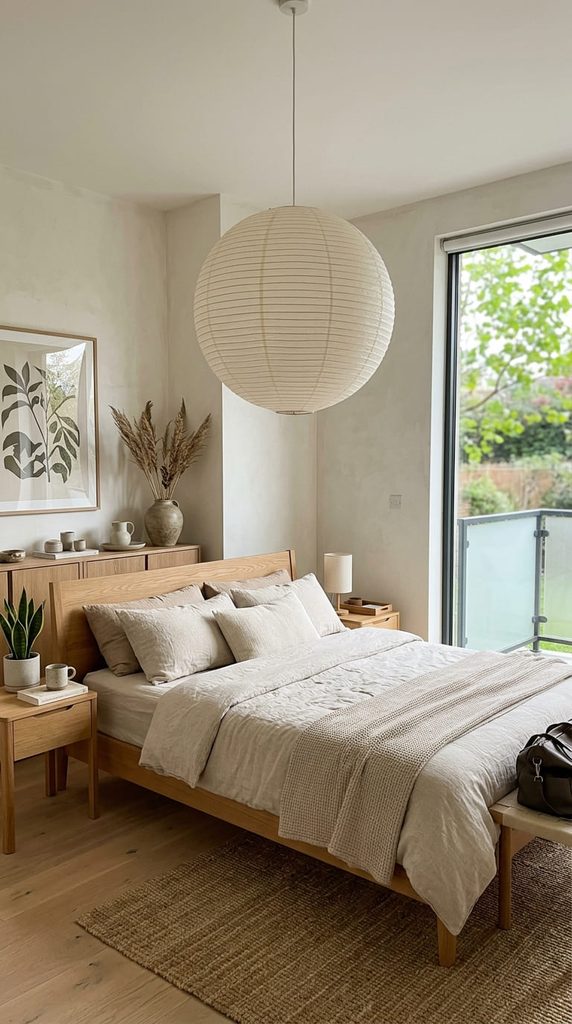
A paper or rice paper lantern is one of those small changes that makes a room instantly feel more considered. The soft, diffused light they give off is a night and day difference compared to a harsh overhead fixture.
I’d hang one over each nightstand or centered above the bed. Either way, it adds a soft glow in the evening that regular lamps just can’t match.
5. Add a Shoji Inspired Screen Divider
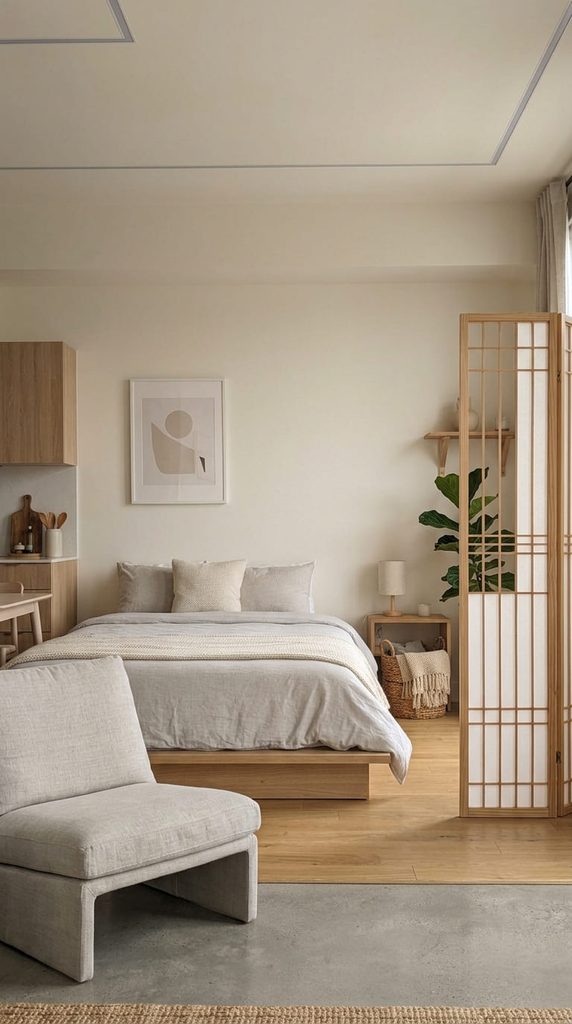
If your bedroom doubles as a workspace or a closet corner, a shoji inspired screen is genuinely one of the most functional Japandi pieces you can buy. It hides clutter and adds texture at the same time, which is a rare combo.
The wood grid frame with the translucent paper panels is such a specific detail that it instantly signals “this room was designed on purpose.” Even a small folding screen tucked in a corner does the job.
6. Swap In Minimalist Floating Nightstands
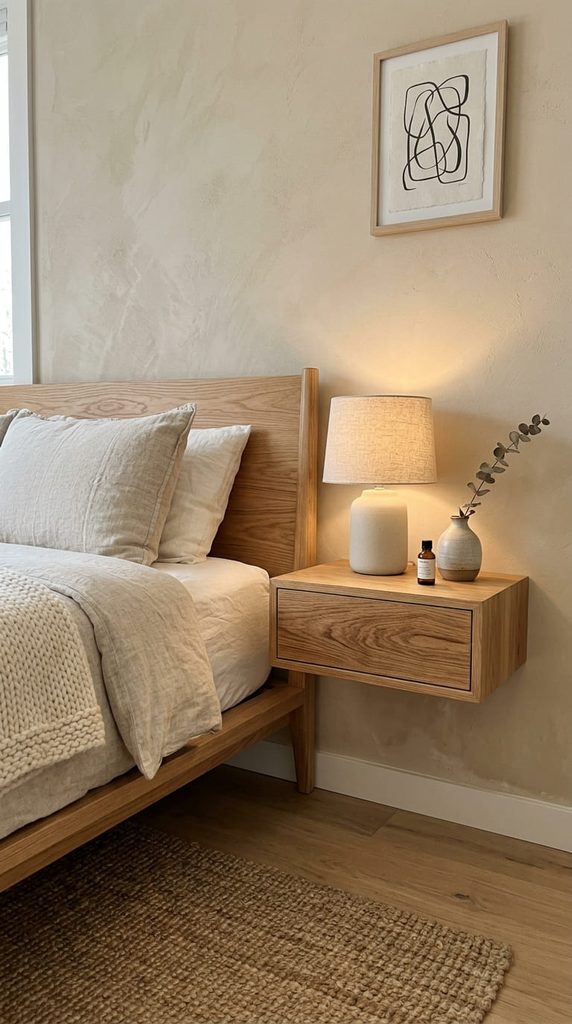
Floating nightstands are one of my favorite small space tricks, and they happen to be extremely Japandi too. Since they’re mounted to the wall instead of sitting on the floor, they free up visual space and make the whole room feel lighter.
They’re a smart pick if you’re working with a smaller bedroom, but honestly they look just as good in a larger room where you want to keep things feeling open.
RELATED: Small Bedroom Decor Ideas: 10 Clever Space-Saving Hacks
7. Layer In Woven Rattan and Cane Accents
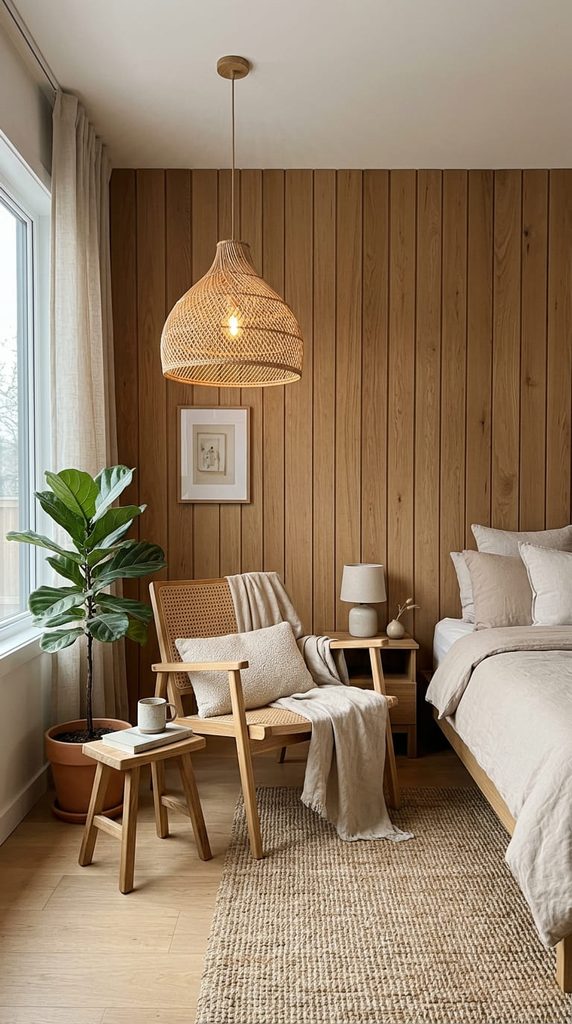
Woven textures are what keep a Japandi room from feeling flat or too matched. Rattan and cane bring in a natural, handmade quality that pairs so well with the clean lines everywhere else in the space.
A rattan pendant light, a cane headboard, or even a small woven basket in the corner all work here. You really only need one or two pieces since a little bit of texture goes a long way.
8. Get Comfortable With Negative Space
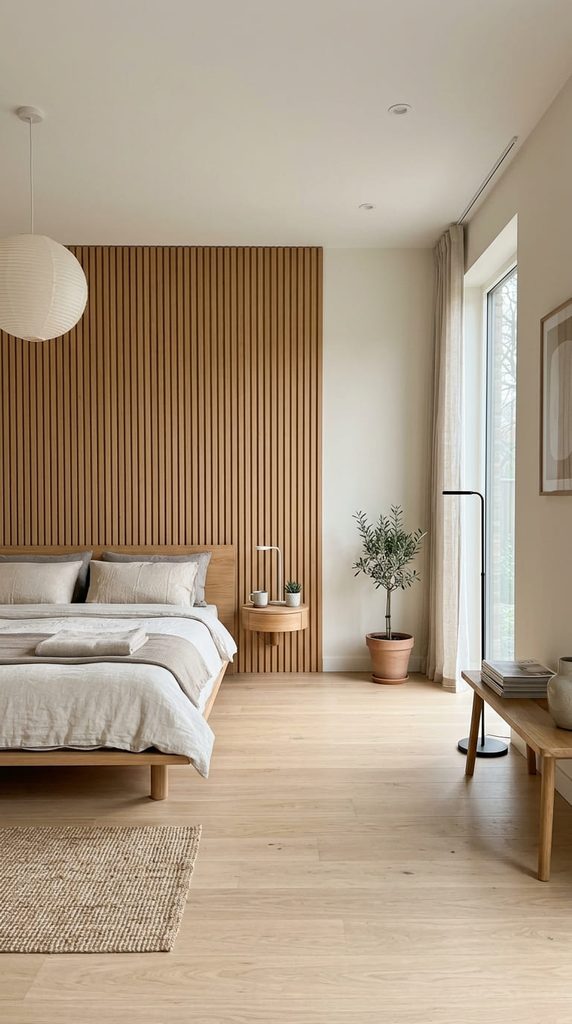
Okay, this one’s less about buying something and more about unlearning a habit, and it’s honestly the hardest part of Japandi to actually commit to. We’re so used to filling every wall and every surface that leaving something empty can feel wrong. It’s not wrong. It’s the whole point.
Less but better is basically the Japandi motto, and I mean that literally. One really good piece of art beats three mediocre ones every single time. One lamp you love beats a cluttered nightstand covered in stuff you don’t even look at anymore.
Try this: pick one wall in your room and leave it completely bare for a week. See how it feels before you rush to fill it. I promise the emptiness starts to feel like a design choice instead of an oversight.
9. Add a Tatami Inspired Area Rug
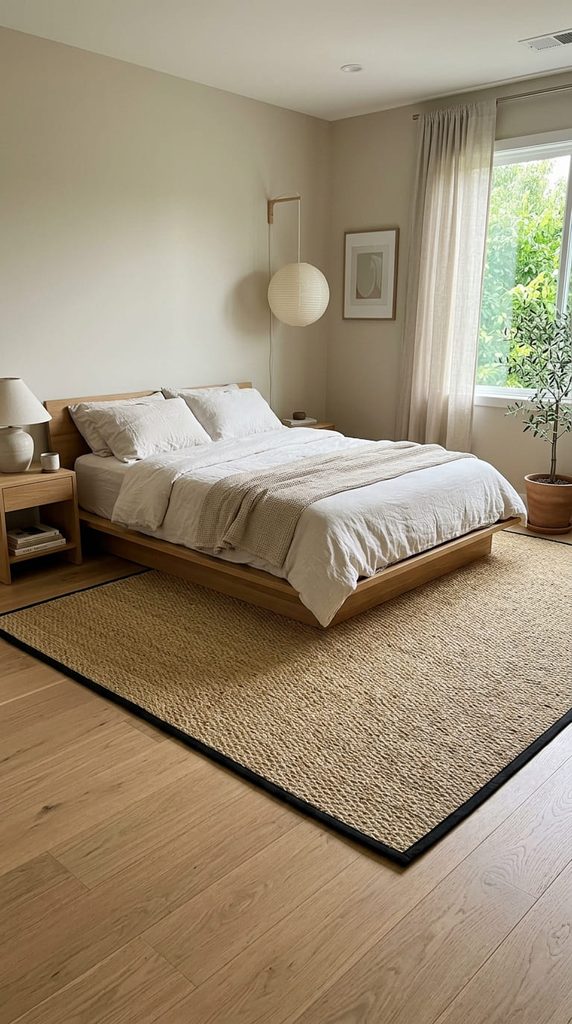
A natural fiber rug with clean, geometric lines is such an easy way to nod to tatami mats without needing an actual tatami floor (which, let’s be real, most of us aren’t installing).
Look for something in jute, seagrass, or a flatweave cotton. The texture underfoot adds warmth, and the natural fiber color ties in perfectly with the wood tones you’ve already got going.
10. Style With Wabi Sabi Ceramic Vases and Pottery
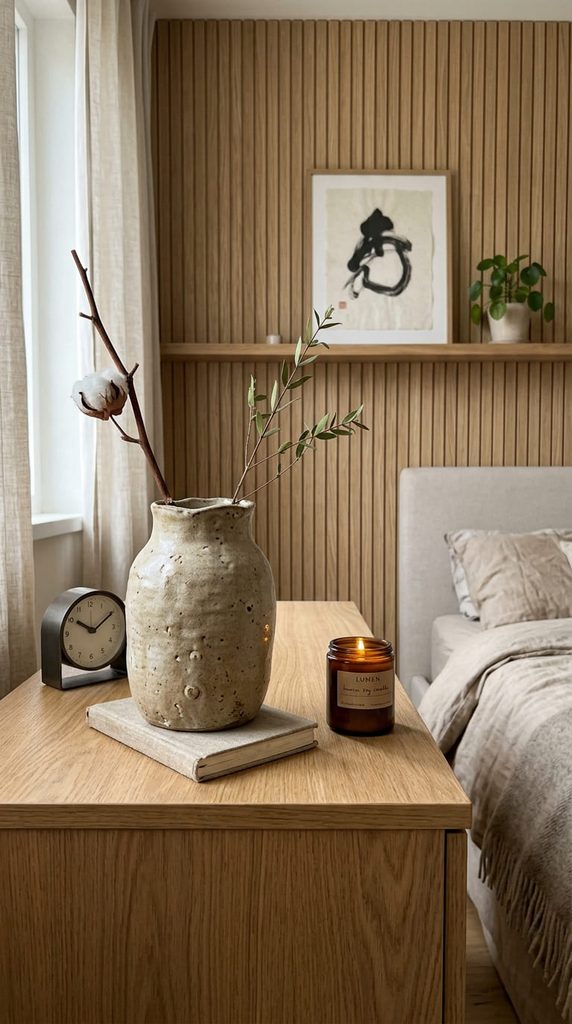
Wabi sabi is basically the idea that imperfect, handmade things are more beautiful than something mass produced and flawless, and ceramics are the easiest way to bring that philosophy into your room. A slightly uneven vase or a bowl with visible glaze drips isn’t a flaw here. It’s the whole appeal.
I keep one imperfect ceramic vase on my dresser with a single dried stem in it, and it somehow feels more finished than anything symmetrical ever did.
11. Prioritize Hidden Storage and Built In Cabinetry
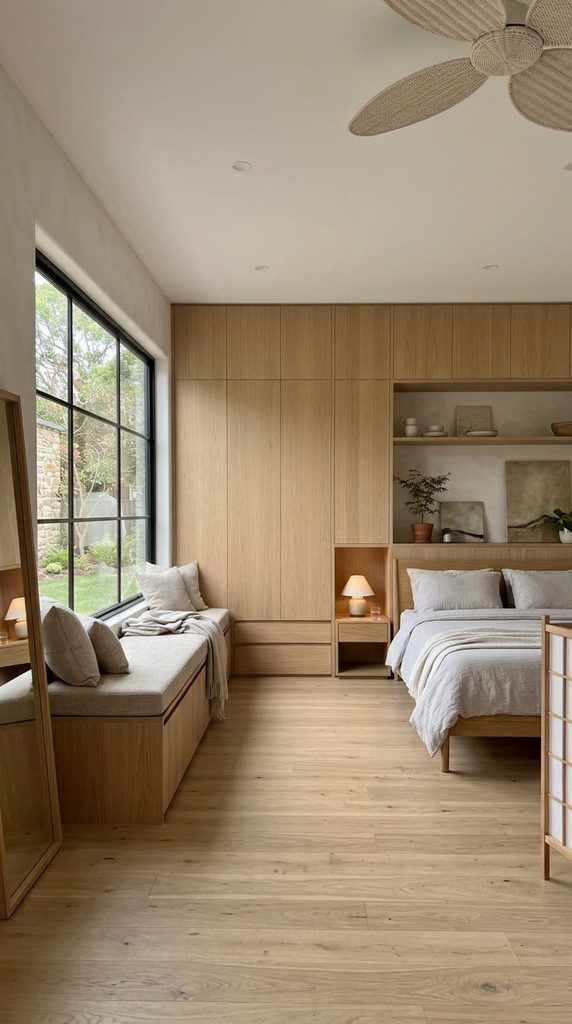
Clutter is basically the enemy of Japandi, so storage that disappears is doing more design work than you’d think. Built in cabinetry, under bed drawers, or even a simple wood cabinet with closed doors all keep the visual noise down.
If built ins aren’t in the budget, a low dresser with clean lines and no visible hardware gets you most of the way there. The goal is just to give everything a home so surfaces stay clear.
12. Balance It Out With Chunky Knit Throws
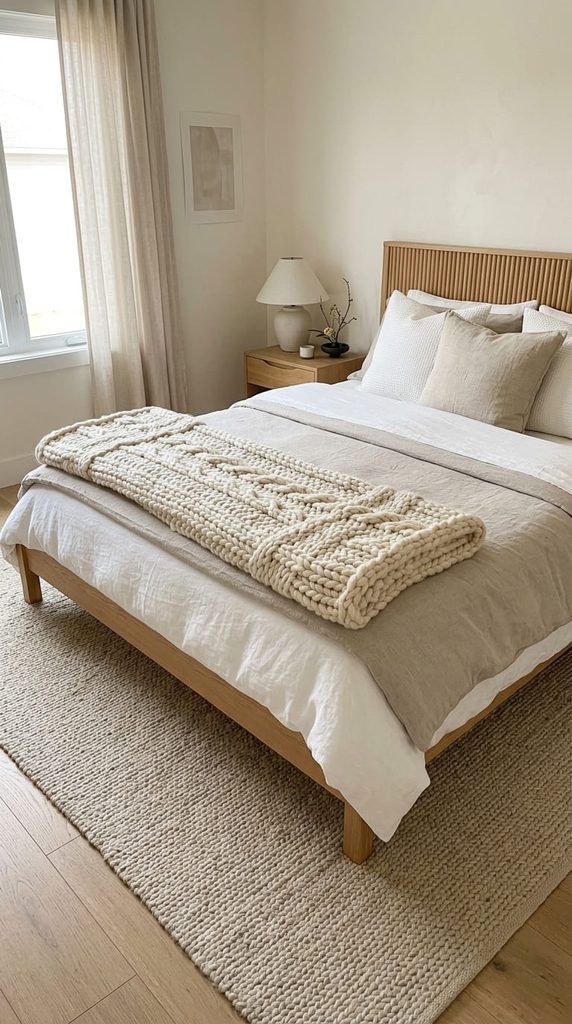
This is the Scandinavian half of Japandi doing its job. All that clean minimalism needs something soft and textured to keep it from feeling cold, and a chunky knit throw is the easiest way to do that.
Drape it at the foot of the bed or over a reading chair. It’s a small detail, but it’s the kind of thing that makes people want to actually touch your room, which is the highest compliment a bedroom can get.
13. Build a Cozy Floor Cushion Reading Nook
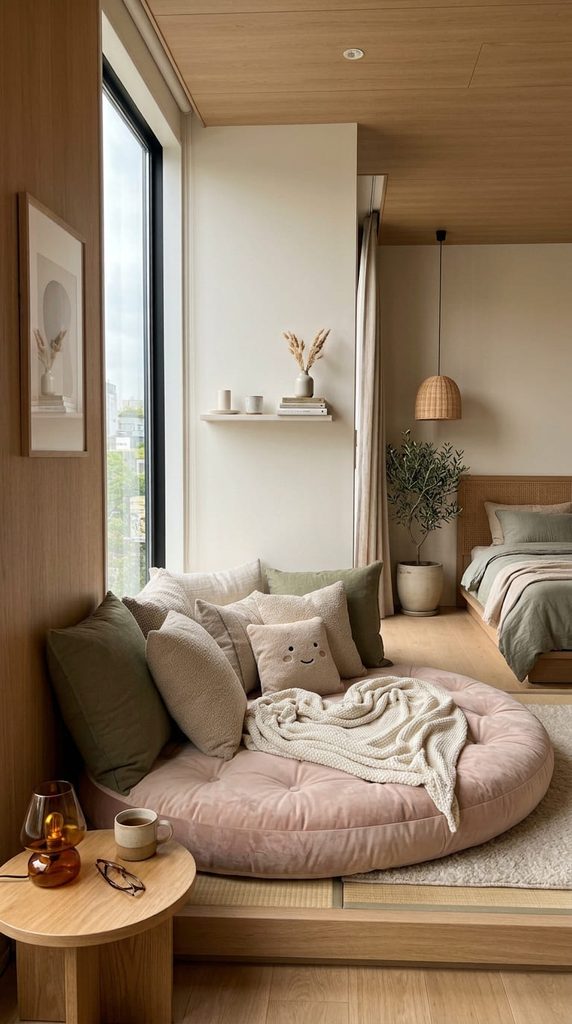
If you’ve got an awkward empty corner, please stop ignoring it, because this is the fix. A low floor cushion, a small side table, and maybe one of those paper lanterns from earlier, and suddenly that dead corner is the best seat in the house.
There’s something about sitting low to the ground with a warm light and a good book that just feels different than sitting in a regular chair. More grounded. More like you actually live there instead of just passing through.
Skip the oversized armchair you were about to buy. This nook will get more use, and it takes up a fraction of the space.
14. Add a Bonsai or Olive Tree Accent
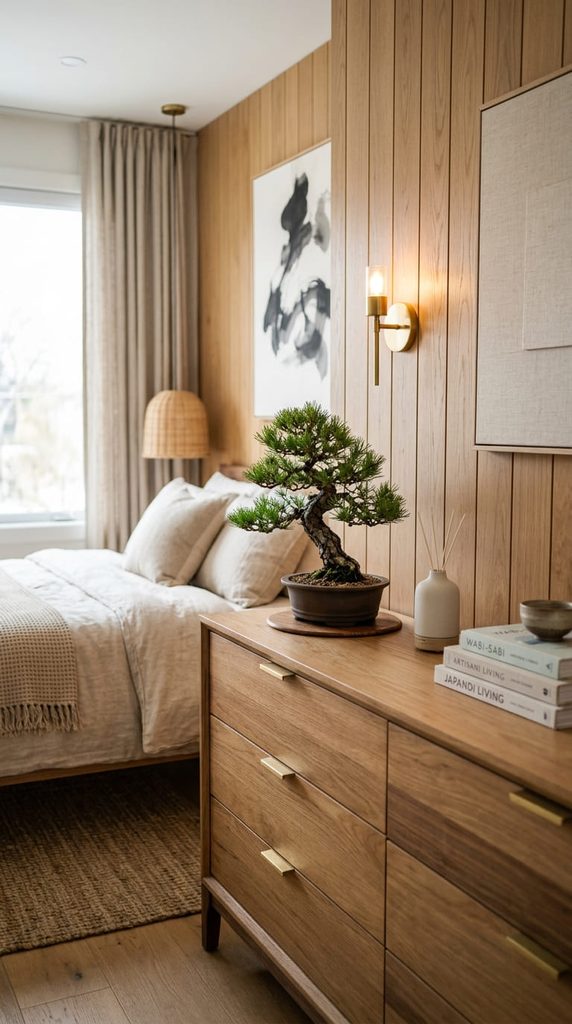
A single, well shaped plant does more for a Japandi room than a whole collection of smaller ones scattered around. A bonsai brings in that intentional, sculptural quality, while an olive tree adds height and a softer, more organic shape.
If you don’t trust yourself to keep a real one alive (also no judgment, plants and I have a complicated history), a high quality artificial version gets you the same visual payoff with zero watering schedule.
15. Hang Sheer Linen Curtains for Softer Light
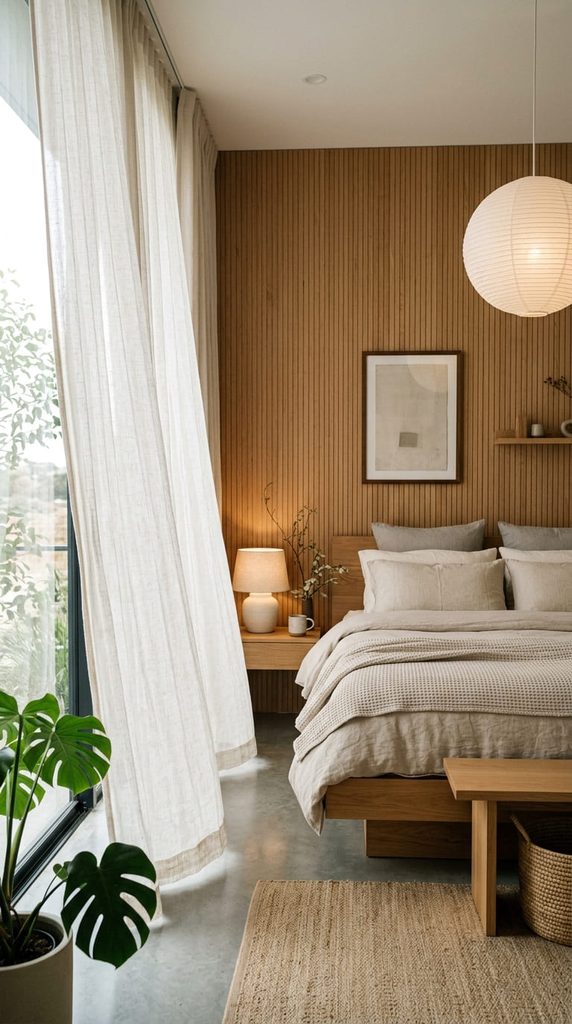
Sheer linen curtains let light filter in softly instead of flooding the room, and that soft, diffused quality is such a big part of what makes a Japandi bedroom feel calm during the day. Heavy blackout drapes have their place, but they’re not doing your aesthetic any favors.
If you need the blackout function for sleep, layer a plain blackout panel behind a sheer linen curtain. You get the function and the look without picking one over the other.
16. Choose Muted Line Art for the Walls
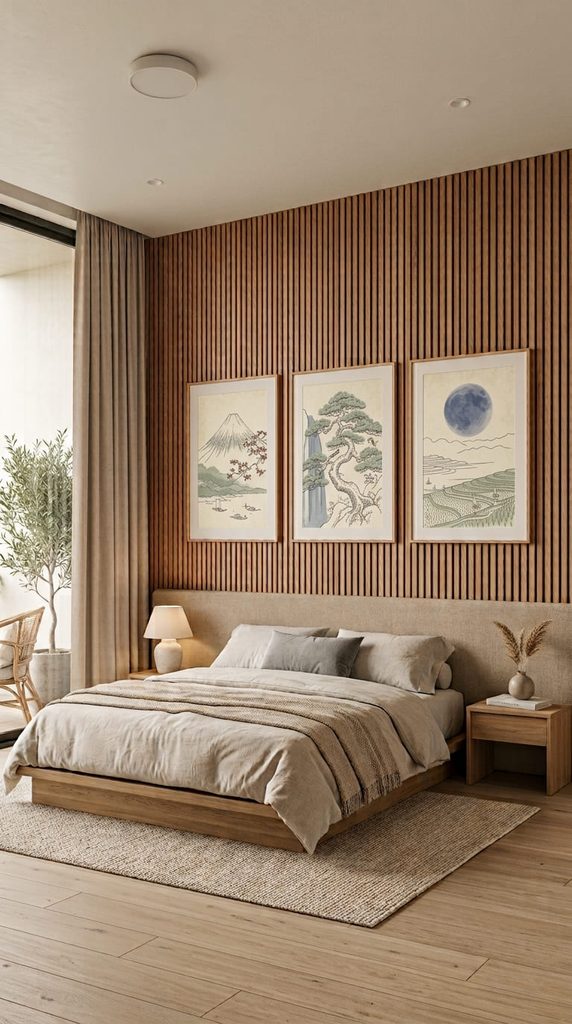
Wall art in a Japandi room should feel quiet, not loud, and simple line art in muted tones is basically the perfect fit. Think a single continuous line drawing of a figure or a landscape, framed simply, with plenty of white space around it.
One large piece or a small set of two makes more impact than a cluttered gallery wall ever could in this style. Give the art room to breathe and it’ll do the rest of the work on its own.
RELATED: Gray and White Bedroom Decor Ideas That Feel Modern And Cozy
17. Let One Statement Wood Headboard Do the Talking
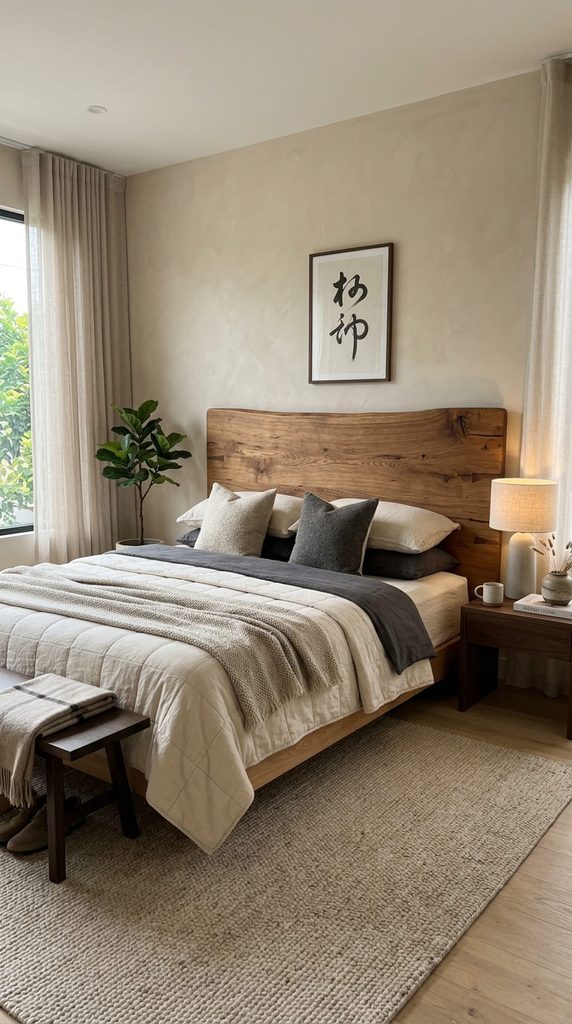
If you only splurge on one piece in this whole room, make it the headboard. A solid wood headboard with clean, simple lines becomes the visual anchor of the entire space, and it means you don’t need much else on that wall.
Slatted wood headboards are especially popular right now, and for good reason. They add texture and warmth without any extra ornamentation, which is exactly the balance Japandi is going for.
18. Install Dimmable Warm Toned Lighting
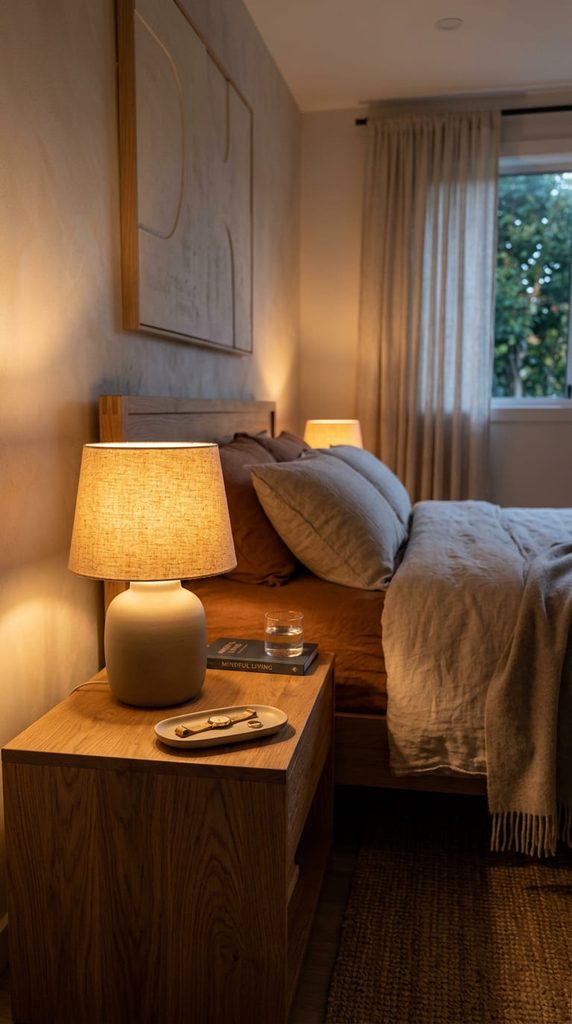
Lighting temperature matters more than people realize. Cool white bulbs make even a beautifully styled Japandi room feel clinical, while warm toned, dimmable lighting does the opposite instantly.
Swap your bulbs to a soft warm white and add a dimmer switch if you can. It’s one of the cheapest changes on this whole list, and it might be the one that changes the room’s mood the most.
19. Bring In Curved, Organic Shaped Furniture
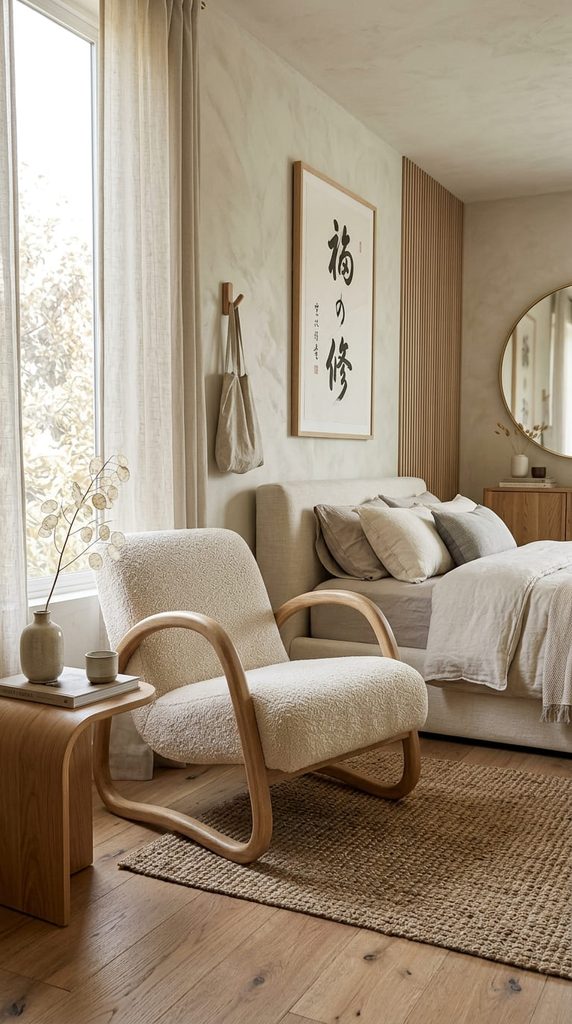
Straight lines and sharp corners everywhere can start to feel a little stiff after a while, so one curved piece really earns its keep here. A rounded accent chair, a curved mirror, or an organically shaped side table softens the whole room without pulling it away from the aesthetic.
It’s a small contrast, but it’s the kind of detail that makes a space feel designed by someone with an actual point of view instead of assembled from a single furniture catalog. Pick one curved piece and let it stand out against everything else.
20. Keep the Palette Deliberately Uncluttered
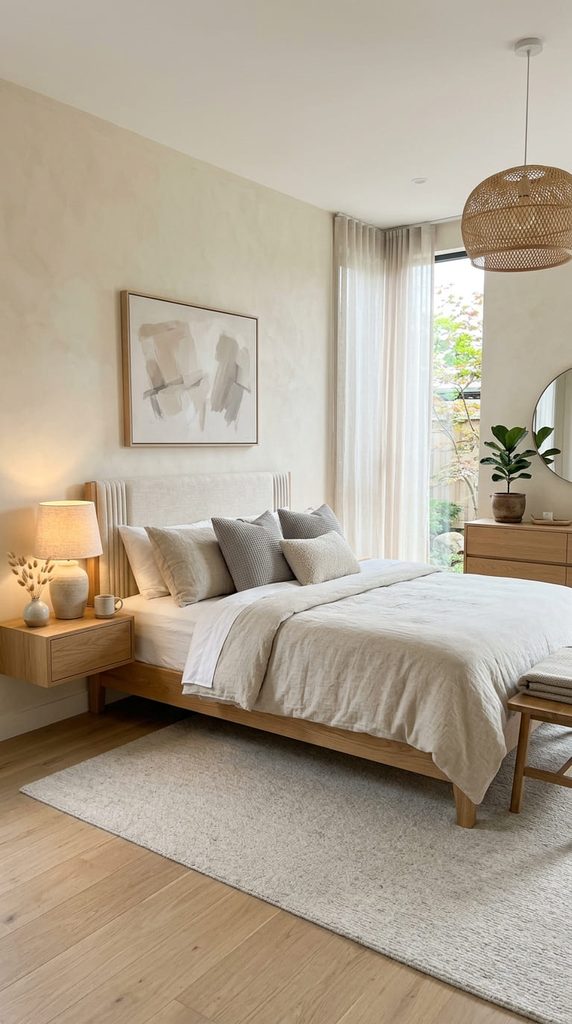
This last one ties every single idea on this list together. Japandi lives and dies by restraint. Stick to three or four colors total across the whole room: your wood tone, one or two muted neutrals, and maybe a single deeper accent like charcoal or forest green.
Every time you’re tempted to add “just one more thing,” ask yourself if it actually earns its spot. If it doesn’t, it probably doesn’t belong in a Japandi room, and that’s genuinely okay.
RELATED: 20 Bedroom Ideas That’ll Make You Want to Redecorate This Weekend
JAPANDI VS SCANDINAVIAN: WHAT’S THE DIFFERENCE
People mix these two up constantly, so here’s the quick version. Scandinavian design leans bright, white, and cheerful, with a strong focus on hygge and cozy layers like sheepskin throws and pale wood. Japandi pulls in Japanese minimalism alongside that, which means darker wood tones, more negative space, and a quieter, more muted color story overall.
Basically, if Scandinavian design is a bright, cozy cabin, Japandi is that same cabin with the lights dimmed slightly and half the throw pillows removed. Both are warm. Japandi is just a little more restrained about it.
FREQUENTLY ASKED QUESTIONS
What colors are used in Japandi bedroom design?
Japandi bedrooms typically stick to a muted, earthy palette that includes warm wood tones, soft white, oatmeal, clay, sage green, and charcoal. The goal is a color story that feels calm and grounded rather than bright or high contrast, so most Japandi rooms avoid bold or saturated colors almost entirely. If you do want a pop of color, a deep forest green or a muted terracotta works well as a single accent rather than a dominant shade.
Is Japandi the same as minimalism?
Not exactly, though the two overlap quite a bit. Minimalism focuses mainly on having less and keeping things simple, while Japandi specifically blends Japanese minimalism with Scandinavian coziness, which means warmth and texture are just as important as the empty space. A purely minimalist room can feel a little stark or cold, but a well done Japandi room should still feel inviting thanks to the wood tones, linen, and soft lighting layered throughout.
How do I make a small bedroom feel Japandi without it looking empty?
Lean on multifunctional furniture and vertical storage so the floor stays clear, since an uncluttered floor plan reads as intentional rather than empty in a small space. Floating nightstands, under bed storage, and a low profile bed all help a small room feel open instead of cramped. Adding warm lighting and one or two textured pieces, like a chunky throw or a woven rug, keeps the room feeling cozy even with fewer items in it overall.
What materials are essential to the Japandi look?
Natural, unfinished, or lightly finished materials are the backbone of Japandi design, especially wood, linen, rattan, and stoneware or ceramic pieces. These materials all share a slightly imperfect, organic quality that fits the wabi sabi philosophy woven into the style. Avoiding high gloss finishes, glossy plastics, and heavily patterned fabrics will keep your room feeling authentic to the aesthetic rather than like a generic neutral bedroom.
Is Japandi bedroom decor budget friendly?
It can be, since a lot of the look comes down to editing what you already have rather than buying everything new. Swapping in warm light bulbs, decluttering surfaces, and adding one or two textured pieces like a throw blanket or a linen duvet cover can shift a room significantly without a big budget. The pieces worth saving up for are usually the bed frame and the headboard, since those two items have the biggest visual impact on the whole room.
These are all the best Japandi bedroom ideas to help you build a space that finally feels like an actual retreat. Which one are you trying first? Let me know in the comments, I’d love to see how your room turns out.